How Kabukicho Became Kabukicho — From Burned Field to Neon
The history of Kabukicho is shorter than most visitors assume. The district did not exist under that name until 1948. Before that, the land north of Shinjuku Station was part of a neighborhood called Tsunohazu, and in the spring of 1945 American air raids burned it almost completely. What rose from the ashes was a planned entertainment quarter, drawn up by local residents who wanted a kabuki theater at its center. The theater was never built. The name stuck anyway.
In short, Kabukicho was made by a residents’ land-readjustment plan, a failed 1950 trade fair, and the Koma Theater, then remade by law: the 1956 Anti-Prostitution Act, the 1984 rewrite of the adult-entertainment law, a deadly 2001 fire, and police cameras from 2002. We link every source and flag what we could not verify.
Before Kabukicho: Tsunohazu and the Rise of Shinjuku
The area that became Kabukicho was formerly known as Tsunohazu North 1-chome, according to the history page of the Kabukicho merchants’ association. A reference answer from the National Diet Library’s Collaborative Reference Database, which cites the Shinjuku Ward Board of Education’s 1976 place-name survey and Kadokawa’s gazetteer of Japanese place names, gives a slightly more precise picture: the new town was carved out of parts of the former Tsunohazu 1-chome and Nishi-Okubo 1-chome.
Secondary accounts describe the older landscape as marshy ground that once held a samurai lord’s estate, and later a girls’ school mixed with homes and small shops. That description appears in a history series by Unseen Japan. We could not find a primary record that confirms the school’s exact location on the future Kabukicho blocks, so we mention it only as a general description.
Shinjuku overtakes the older districts
What changed the area’s future was the growth of Shinjuku Station. According to Shinjuku City’s official history page, department stores, cinemas, theaters, and cafés crowded around the station in the prewar decades, and Shinjuku replaced Yotsuya and Kagurazaka as the leading entertainment area of Tokyo’s western side. Tsunohazu sat just north of that boom.
1945: The Year the District Burned
Shinjuku City’s history page states that air raids between May and August 1945 destroyed most of the ward’s territory, including the once-lively area around the station. The figures it gives are stark. The housing stock fell from 63,295 units before the war to 6,836, and the population fell from about 400,000 to about 78,000 by the end of the war. The merchants’ association says the future Kabukicho blocks were burned out in the spring raids of April and May 1945. Sources disagree on the exact night, so we do not name one.
Suzuki Kihei’s plan, four days after surrender
The man most closely tied to the district’s founding is Suzuki Kihei, the head of the local neighborhood association. A local history series published by Sumitomo Mitsui Trust Realty says he began organizing reconstruction on August 19, 1945, just four days after Japan’s surrender was announced. A Reconstruction Cooperation Association with Suzuki as chairman followed, which the merchants’ association dates to 1946, and with it a land readjustment, in which owners give up part of their plots for streets and public space.
The merchants’ association says that Suzuki imagined “artistic facilities” and a “moral business district,” and that the readjustment work was completed in December 1947. Hashiguchi Toshio, a former director of the Shinjuku Historical Museum, writes in a Nippon.com history of Shinjuku that Suzuki wanted “a lively but respectable” shopping and entertainment area. The founders did not plan a red-light district.
Why Is It Called Kabukicho? The Theater That Never Came
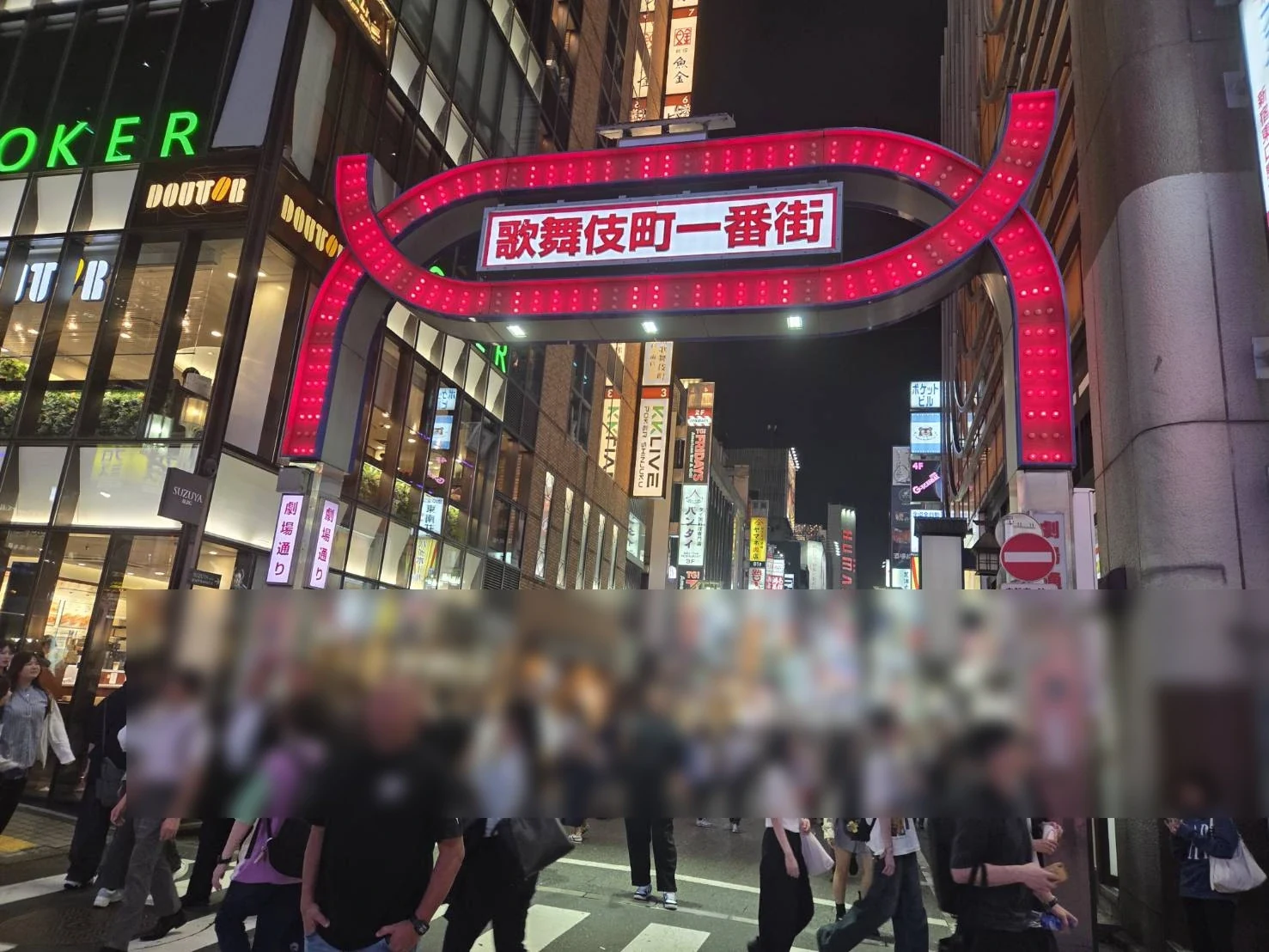
Kabukicho means, literally, “kabuki town.” There is no kabuki theater in it, and there never has been. The NDL reference answer puts it plainly: the name is a remnant of a plan to bring a kabuki theater to the district. The merchants’ association credits the name itself to Ishikawa Hideaki, then head of city planning.
Local histories name the intended venue as the Kikuza, a kabuki theater. The Sumitomo Mitsui Trust Realty history says that building restrictions and a freeze on bank deposits in the early postwar years blocked the project. Only a cinema, the Chikyuza, was completed in that first phase. Hashiguchi adds that the Chikyuza was opened by Lin Yi-wen, a Taiwanese-born businessman and politician. We found no primary document that records exactly when or why the Kikuza plan was dropped, so treat the details of its collapse as the district’s own account.
Checking the 1948 date
The NDL reference answer gives Showa 23 (1948) as the year of naming and lists its sources, including the Shinjuku Ward Place-Name Record (1976) and Heibonsha’s Historical Place Names of Tokyo (2002). The merchants’ association gives a precise date, April 1, 1948. The year is therefore well supported. The exact day comes from the association, which is a local body rather than an archive, but we found nothing that contradicts it.
By coincidence, the original version of today’s adult-entertainment law, the Fuzoku Eigyo Torishimari Ho, was promulgated on July 10, 1948, according to the NDL’s Japanese Law Index. The town and the law that would shape it were born in the same year.
The Black-Market Years Next Door
“Light from Shinjuku”
While Suzuki’s group redrew the burned blocks, the area around Shinjuku Station was filling with black markets. Unseen Japan, citing John Dower’s Embracing Defeat, describes the first large market near the station as the project of Ozu Kinosuke, the boss of a local gang, who recruited small factory owners through newspaper advertisements, and says the market soon had a sign reading “Light from Shinjuku.” Such markets supplied a devastated population with everyday goods, often at gouging prices.
These markets stood mainly on the station side, not on the future Kabukicho grid.
From stalls to Golden Gai
When the city cleared the markets, some of their vendors moved. According to the Sumitomo Mitsui Trust Realty history, former market vendors relocated after 1949 to the strip just east of Kabukicho that became Golden Gai, where roughly 240 tiny wooden bars still stand. The occupation years also shaped nightlife in other ways. Tokyo’s official “comfort facilities” for occupation troops opened in 1945, a story told in our piece on the RAA and its postwar facilities.
The 1950 Trade Fair and the Koma Era
Suzuki’s group needed crowds to make the new district work. Their answer was the Tokyo Industrial Culture Exposition, held in Kabukicho in 1950. The merchants’ association calls the event itself “a massive failure,” and the Sumitomo Mitsui Trust Realty history says it failed commercially. Yet the fair did two useful things. It helped get building restrictions lifted, and it left large structures behind. The local Kabukicho Culture Press notes that the fair had industrial halls, theaters, and even large dinosaur models, and that many of its buildings were later converted into movie theaters.
Koma Theater: the family-entertainment ideal
The high point of Suzuki’s vision came in December 1956, when the Shinjuku Koma Theater opened with more than 2,700 seats, according to Kabukicho Culture Press. It hosted musicals and big-name enka singers, and it stood beside a square ringed by cinemas. For a time, Kabukicho was what its founders wanted. Seibu-Shinjuku Station opened in 1952, per Hashiguchi, making the area even easier to reach. The Koma closed in 2008 after 52 years.
After 1958: How the Anti-Prostitution Law Reshaped the District
Through the early 1950s, organized prostitution in Tokyo was concentrated in police-tolerated zones known as akasen (red lines) and aosen (blue lines). Our explainer on Japan’s red lines and blue lines covers how those zones worked. The Anti-Prostitution Act (Act No. 118 of 1956) ended them. The text on e-Gov shows that the law took effect on April 1, 1957, with its penalties following a year later; the story of that final deadline is told in our piece on 1958.
The key point for Kabukicho is how the law is written. Article 3 says that no one may engage in prostitution or be a client, but it attaches no penalty to the act itself. The penalties fall on solicitation, brokering, providing premises, and running a business. That design left space for businesses that offered something short of legally defined prostitution, or that could claim to.
Bars, cabarets, and bathhouses
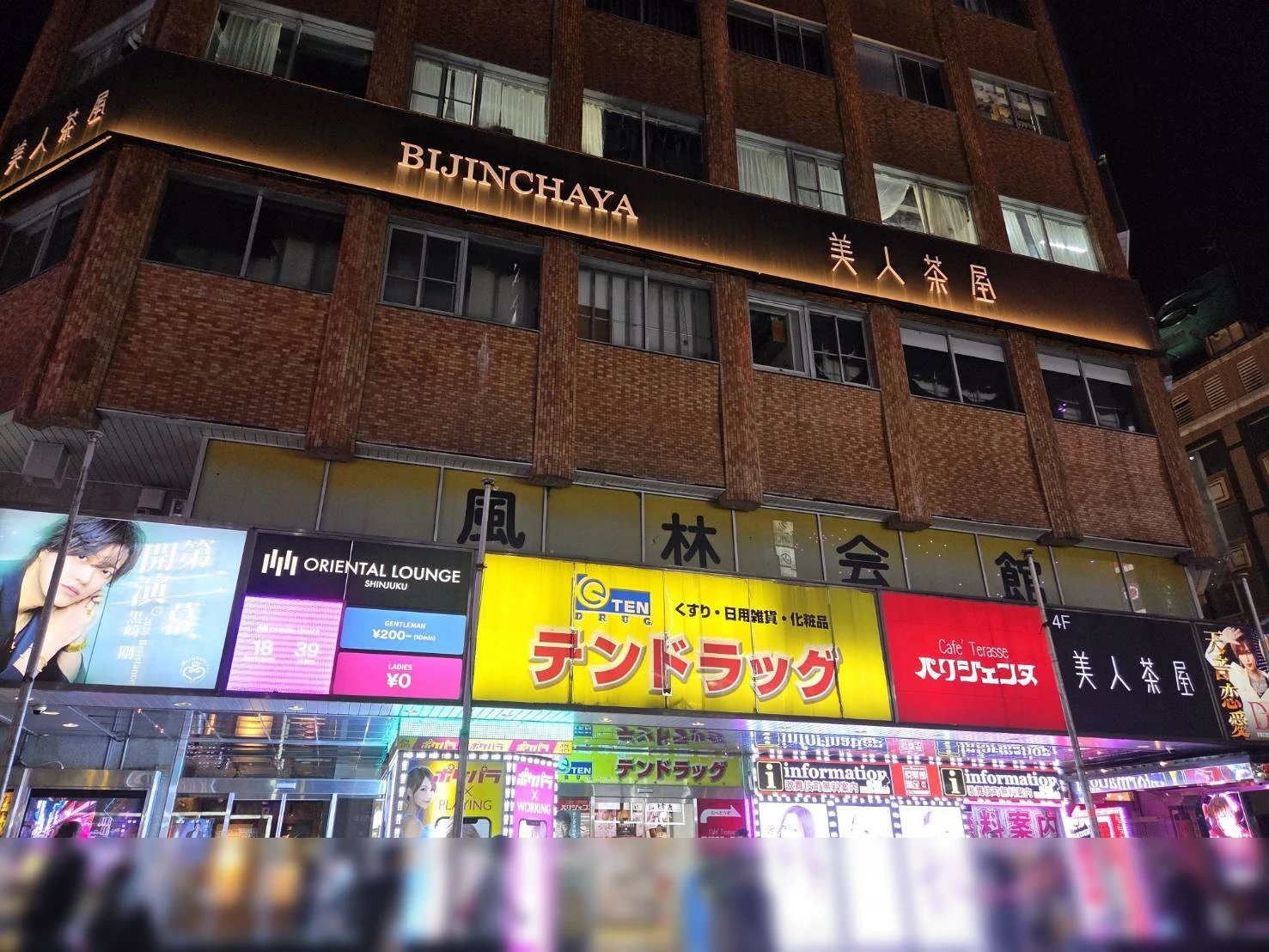
Hashiguchi writes that after the law closed nearby brothels, many businesses in the sex trade moved into Kabukicho, pulling the district away from Suzuki’s “respectable” plan and giving it the reputation it still carries. We did not find statistics that show how many businesses moved or when, so we cannot give a number. What is clear from the legal structure is the direction of change. Operators moved into formats that were licensed under other laws: bars and cabarets with hostesses, and bathhouse-style businesses licensed as public baths. The bathhouse format, which began in 1951 with a Tokyo venue called Tokyo Onsen, is the subject of our history of how “Turkish baths” became soaplands.
For comparison, the older quarter of Yoshiwara, which had been a licensed district for three centuries, went through the same squeeze in 1958. Our long read on Yoshiwara’s three hundred years shows how it turned into a bathhouse district.
1984: The Adult-Entertainment Law Is Rewritten
In 1984 the 1948 law received a major amendment. According to the NDL Japanese Law Index, the amending act was Act No. 76 of 1984, promulgated on August 14, 1984 after passage by the 101st Diet on August 8. It also changed the title of the law to the one used today, the Act on Control and Improvement of Amusement Business, known in Japanese as the Fueiho. Its enforcement regulation was issued by the National Public Safety Commission on January 11, 1985.
The rewrite created a separate category for sex-related businesses instead of leaving them in the gray area between bars and baths. Under the law as it stands today, a National Police Agency overview explains, storefront sex businesses operate under a notification system rather than a license, and the law itself bars them from within 200 meters of schools, libraries and similar facilities, and prefectural ordinances can widen those no-go zones. For Kabukicho this was a turning point in two ways. It gave the existing businesses a legal frame, and it gave the police a tool to regulate them. The same period saw the bathhouse industry drop the “Turkish” label, as covered in our article on the 1984 renaming.
| Law | Year | What it did | Effect on Kabukicho |
|---|---|---|---|
| Fuzoku Eigyo Torishimari Ho (Act No. 122) | 1948 | Original version of today’s Fueiho | Arrived the same year the district was named |
| Anti-Prostitution Act (Act No. 118) | 1956 (penalties from 1958) | Punished solicitation, brokering, and management; no penalty for the act itself | Pushed operators into bar, cabaret, and bathhouse formats |
| Fueiho amendment (Act No. 76) | 1984 | Renamed the law; created a regulated category for sex-related businesses | Brought existing shops into a notification and zoning system |
| Fire Service Act amendment | 2002 | Stronger inspections, orders, public disclosure, and penalties | Direct response to the 2001 Kabukicho building fire |
2001–2005: Fire, Cameras, and a “Renaissance”
The 2001 building fire
On September 1, 2001, a fire in a small multi-tenant building in Kabukicho killed 44 people. The Tokyo Fire Department notes that goods left on the stairs helped the fire spread. The disaster led to a 2002 revision of the Fire Service Act that expanded inspection powers, removed advance notice of inspections, and allowed violations to be made public.
Fifty-five cameras
Months later, the Tokyo Metropolitan Police Department switched on its first street-camera system in the district. The MPD’s own page says the Kabukicho system started on February 27, 2002, with 46 dome cameras and 9 fixed cameras, 55 in total. Shibuya, Ikebukuro, Ueno, Roppongi, and Kinshicho followed between 2004 and 2013.
Kabukicho Renaissance
In January 2005, Shinjuku City, local merchants, police, fire services, and businesses formed the Kabukicho Renaissance Promotion Council. The city’s description sets its goal as turning Kabukicho into a town “where everyone can enjoy themselves safely,” with a clean-up project, a community-revitalization project, and an urban-development project. A town-management body set up in 2008 still runs weekly street clean-ups.
Godzilla and the Tower: Rebranding Through Redevelopment
The site of the Koma Theater sat empty for years after 2008. In April 2015, Toho opened the Shinjuku Toho Building there, with a cinema complex and a hotel. According to Cinema Today’s report, a Godzilla head about 12 meters tall was unveiled on April 9, 2015, on an eighth-floor terrace about 52 meters above the street, and the building opened on April 17. At the ceremony, Shinjuku’s mayor handed Godzilla a special resident certificate. The gesture signaled that the city wanted Kabukicho known for more than nightlife.
2023: Tokyu Kabukicho Tower
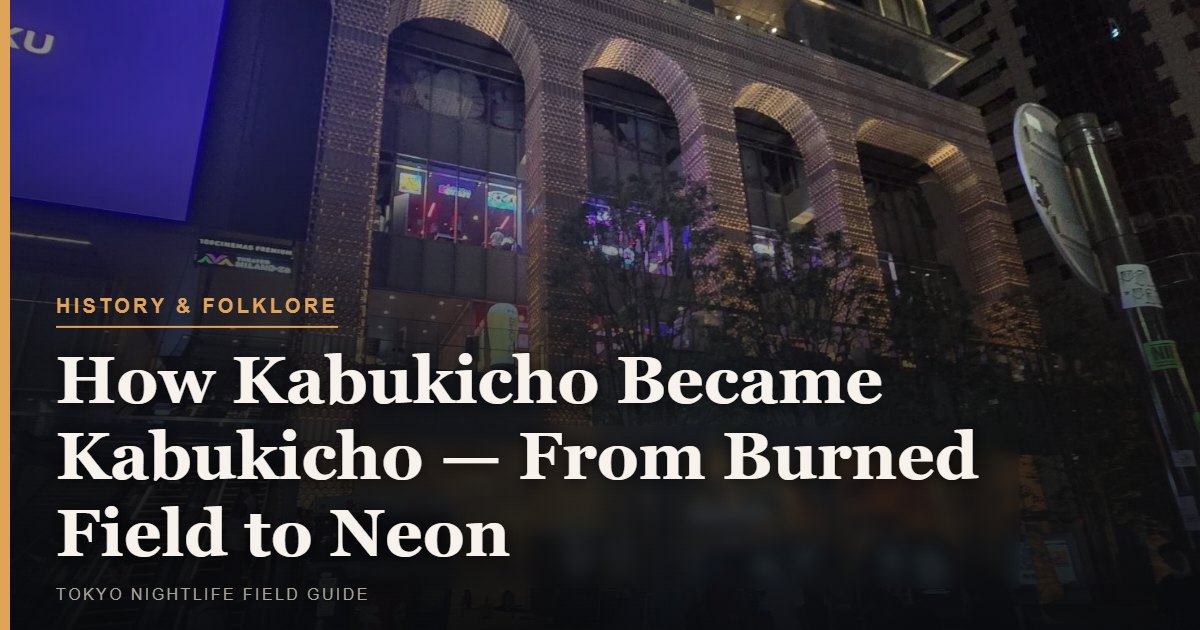
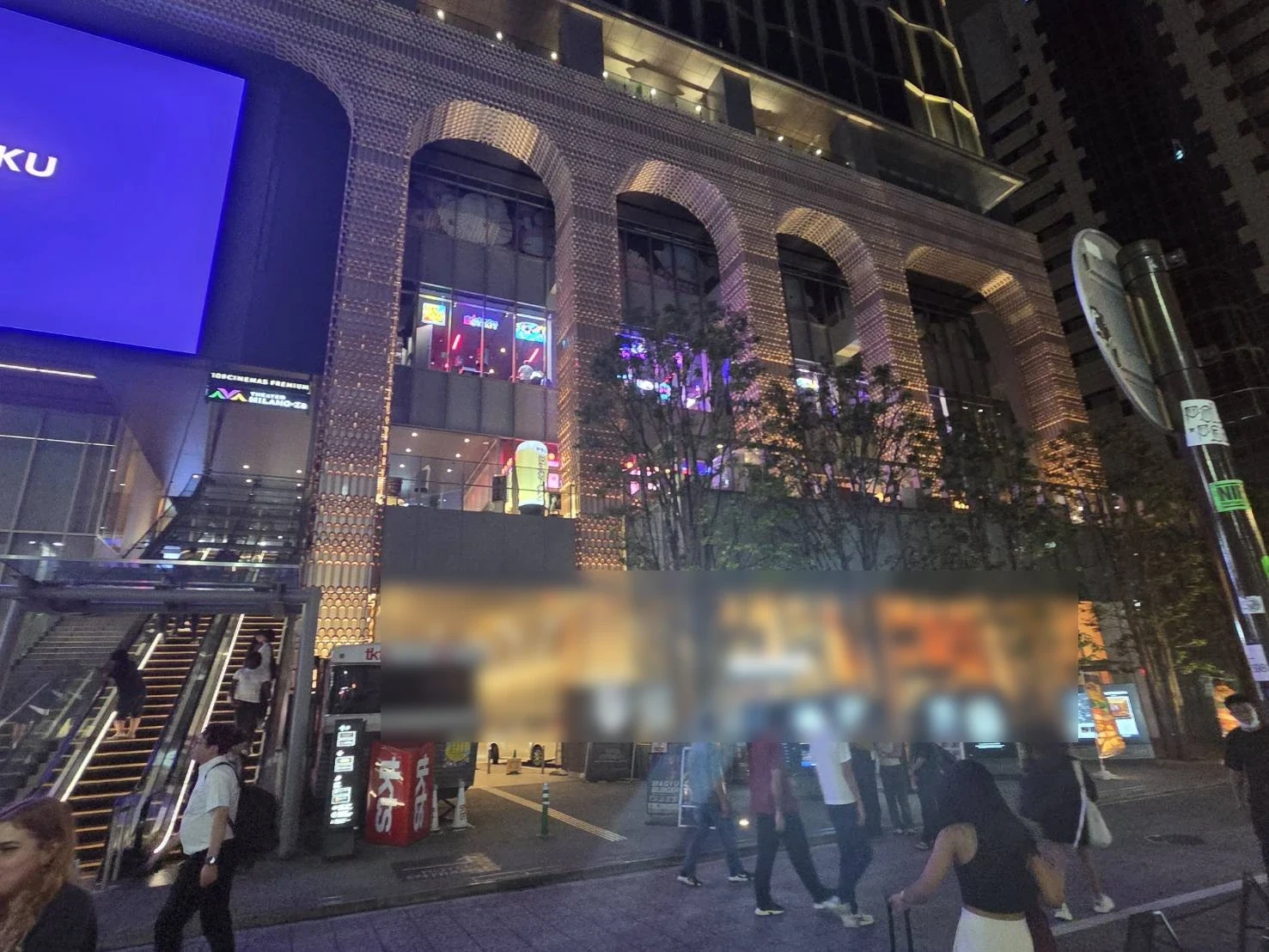
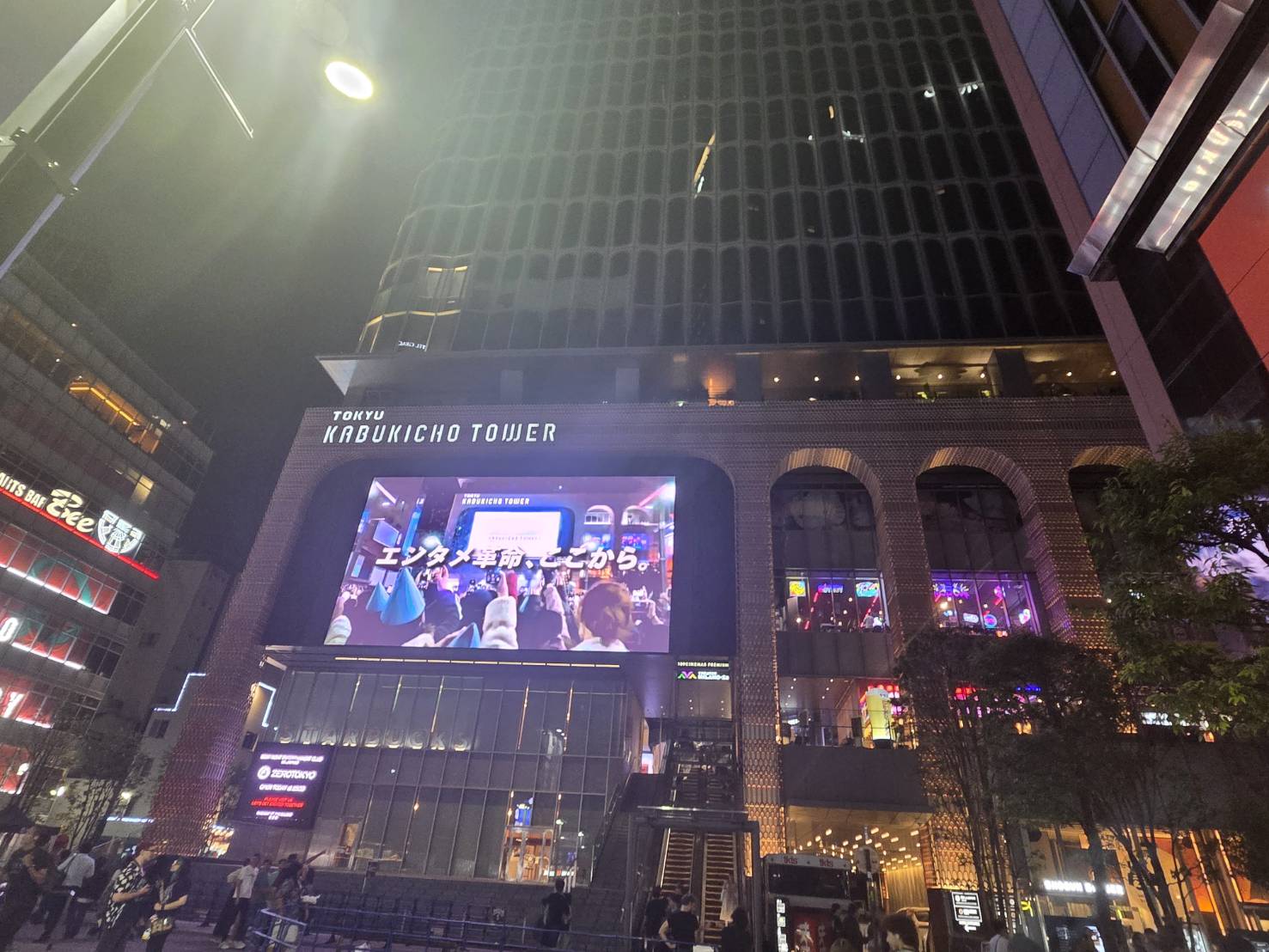
The second anchor stands on the former site of the Shinjuku Milano-za cinema, which closed at the end of 2014, according to ITmedia Business. Tokyu opened the Tokyu Kabukicho Tower on April 14, 2023. The company’s announcement gives its height as about 225 meters, with 48 floors above ground, and reports that it passed one million visitors about a month after opening. Its theater is named THEATER MILANO-Za, and a Tokyu release describes the name as carrying on a cinema that “developed together with Kabukicho.” It combines two hotels, a theater, cinemas, and a live hall, which is closer to Suzuki Kihei’s 1945 idea of an entertainment town than anything built in between.
Kabukicho in 2026: What Has and Has Not Changed
The district’s leaders do not claim the job is done. At the Renaissance council meeting on August 19, 2025, Shinjuku City reported problems including illegal dumping of business waste and young people gathering in the Cinecity Plaza area near the Godzilla building, where some have become victims of crime. The city’s summary quotes the mayor saying that “dirty towns don’t attract people” and that the whole district must keep working on safety and cleanliness to change its image.
Host clubs remain a national issue. The National Police Agency’s overview counts about 1,000 host clubs nationwide and reports 76 cases and 172 people cleared by police between January 2023 and May 2024, including cases in which women were pushed into sex work to pay off club bills. Readers who think of Tokyo nightlife through older images of courtesans and entertainers may find our explainer on the difference between oiran and geisha useful, because neither tradition has much to do with the modern host-club business.
The Okubo Park warning
The most serious present-day problem is street solicitation around Okubo Park, on the northern edge of Kabukicho. We describe it here only as a warning. According to Kyodo News and Tokyo Reporter, reporting an MPD announcement on March 16, 2026, police arrested 112 women in 2025 for waiting for customers around the park in Kabukicho. We could not find the MPD’s own release online, so this figure rests on those reports.
The legal basis is Article 5 of the Anti-Prostitution Act. The e-Gov text makes it an offense, for the purpose of prostitution, to solicit people in public places, to stand in the way of or follow people in order to solicit them, or to wait for customers in public. The penalty is up to six months’ imprisonment or a fine of up to 20,000 yen. As Tokyo Reporter notes, the law has no mechanism for punishing the men who approach.
For visitors, the meaning is simple. The park area is not a “scene” to watch; it is where young people are exploited and where police are active. Approaching anyone there risks scams, robbery, and involvement in the exploitation of minors. Walk past.
→ For the staffed counters that are not street touts, see what a Japanese “free information center” is.
| Indicator | Figure | Source |
|---|---|---|
| Police street cameras installed in Kabukicho (2002) | 55 | Tokyo MPD |
| Deaths in the 2001 Kabukicho building fire | 44 | Tokyo Fire Department |
| Tokyu Kabukicho Tower height | about 225 m, 48 floors | Tokyu |
| Tower visitors by May 22, 2023 | 1 million | Tokyu |
| Solicitation arrests around Okubo Park and Kabukicho (2025) | 112 | MPD announcement, via Kyodo News and Tokyo Reporter |
| Host-club-related cases cleared nationwide (Jan 2023–May 2024) | 76 cases, 172 people | National Police Agency |
Kabukicho Timeline, 1945–2026
| Year | Event |
|---|---|
| 1945 | Air raids burn Tsunohazu; Suzuki Kihei begins reconstruction planning (August 19) |
| 1947 | Shinjuku Ward formed (March 15); land readjustment completed (December) |
| 1948 | Name Kabukicho adopted (April 1, per the merchants’ association); first adult-entertainment law (July 10) |
| 1950 | Tokyo Industrial Culture Exposition held; commercially unsuccessful |
| 1956 | Anti-Prostitution Act passed; Koma Theater opens (December) |
| 1958 | Penalties of the Anti-Prostitution Act take full effect (April 1) |
| 1984 | Adult-entertainment law rewritten and renamed (Act No. 76, August 14) |
| 2001 | Building fire kills 44 people (September 1) |
| 2002 | 55 police street cameras go live (February 27) |
| 2005 | Kabukicho Renaissance Promotion Council formed (January) |
| 2008 | Koma Theater closes |
| 2015 | Shinjuku Toho Building and Godzilla head open (April) |
| 2023 | Tokyu Kabukicho Tower opens (April 14) |
| 2025 | 112 solicitation arrests around Okubo Park and Kabukicho |
Frequently Asked Questions
When did Kabukicho get its name?
In 1948. The National Diet Library’s reference database gives the year, and the local merchants’ association gives the date as April 1, 1948.
Why is there no kabuki theater in Kabukicho?
The planned theater, remembered locally as the Kikuza, was never built. Postwar building restrictions and a freeze on funds blocked it, and a cinema opened instead.
Who founded Kabukicho?
Suzuki Kihei, a neighborhood association leader, organized the landowners after the 1945 air raids. The planner Ishikawa Hideaki is credited with the name.
Was Kabukicho a red-light district from the start?
No. Its founders planned a respectable entertainment district. The sex trade moved in mainly after the Anti-Prostitution Act closed older zones in 1958.
Is Kabukicho safe to visit in 2026?
Most of it is busy and well policed, with cinemas, hotels, and restaurants. Avoid touts, unknown bars, and the area around Okubo Park at night, where police regularly make arrests.
Is street solicitation legal in Japan?
No. Article 5 of the Anti-Prostitution Act punishes soliciting or waiting for customers in public with up to six months’ imprisonment or a fine of up to 20,000 yen.