The history of Kabukicho, sourced: 1945 air raids, a kabuki theater never built, the 1948 name, the Koma era, 1958 and 1984 laws, CCTV, Okubo Park today.
Practical guides to Tokyo's nightlife, written and fact-checked in Tokyo.
The history of Kabukicho, sourced: 1945 air raids, a kabuki theater never built, the 1948 name, the Koma era, 1958 and 1984 laws, CCTV, Okubo Park today.
How Japan’s Home Ministry set up “comfort facilities” for Allied troops in 1945, why the RAA closed in 1946, and which famous figures lack documents.
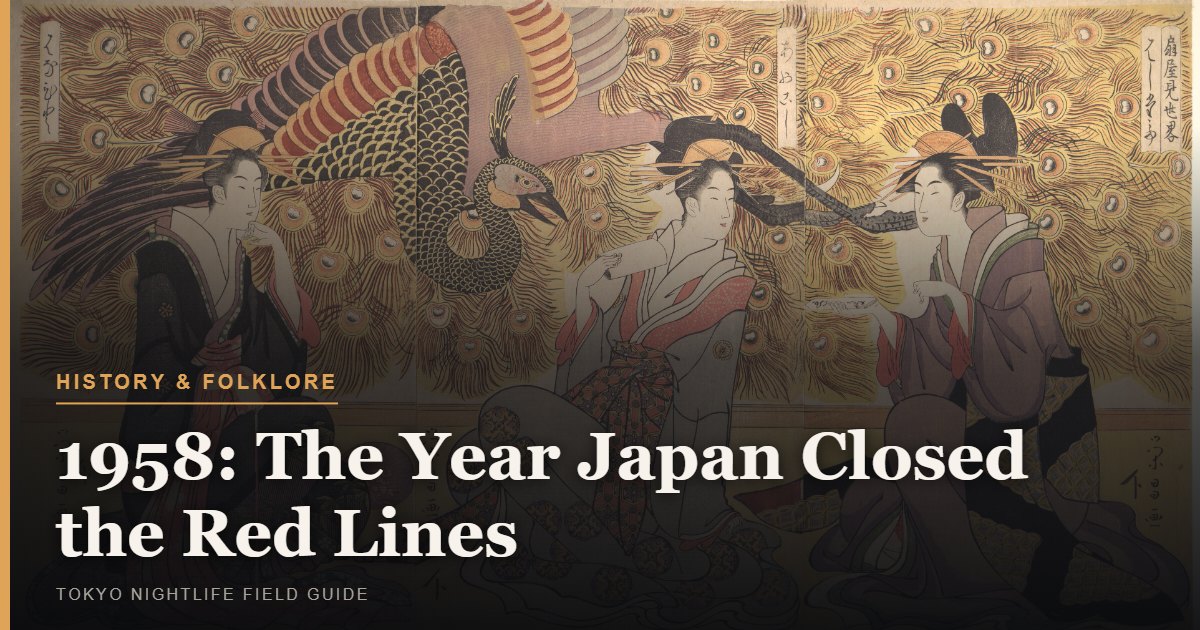
How Japan’s 1956 Anti-Prostitution Act closed the red lines in 1958: the two-stage start, what it punishes and doesn’t, and the loophole today.
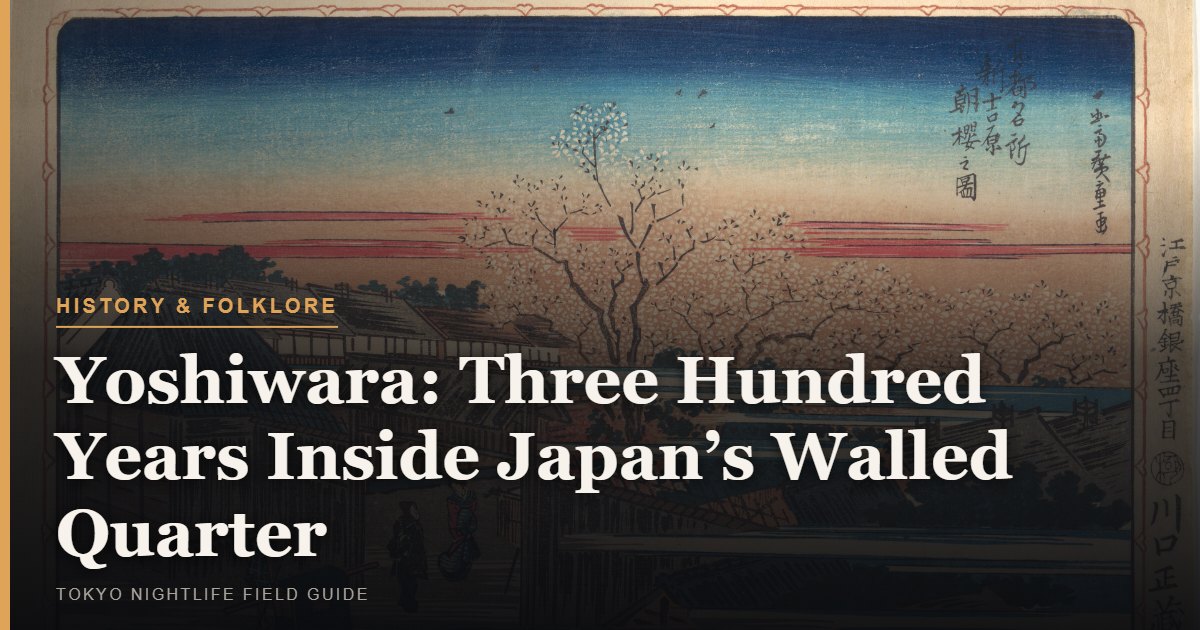
The history of Yoshiwara from its 1617 license to the 1958 closure: the walls and gate, ranks, debt, the 1872 edict, and what remains in Senzoku today.
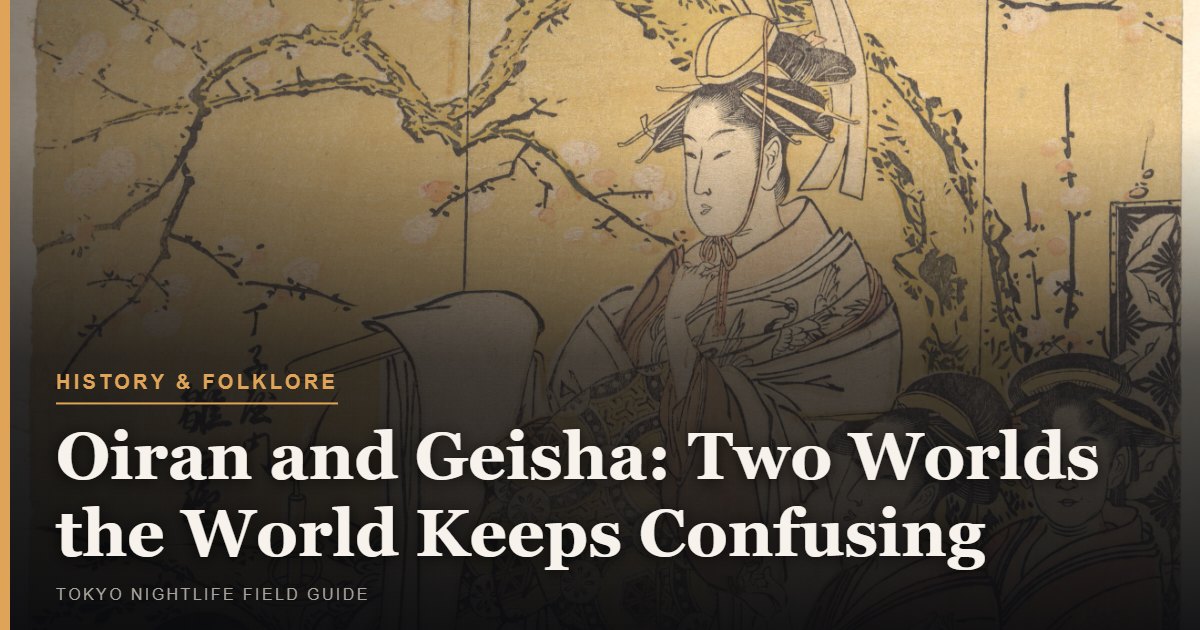
Oiran were licensed courtesans; geisha are performing artists. How to tell them apart, why they get confused, and what the mizuage claims really show.
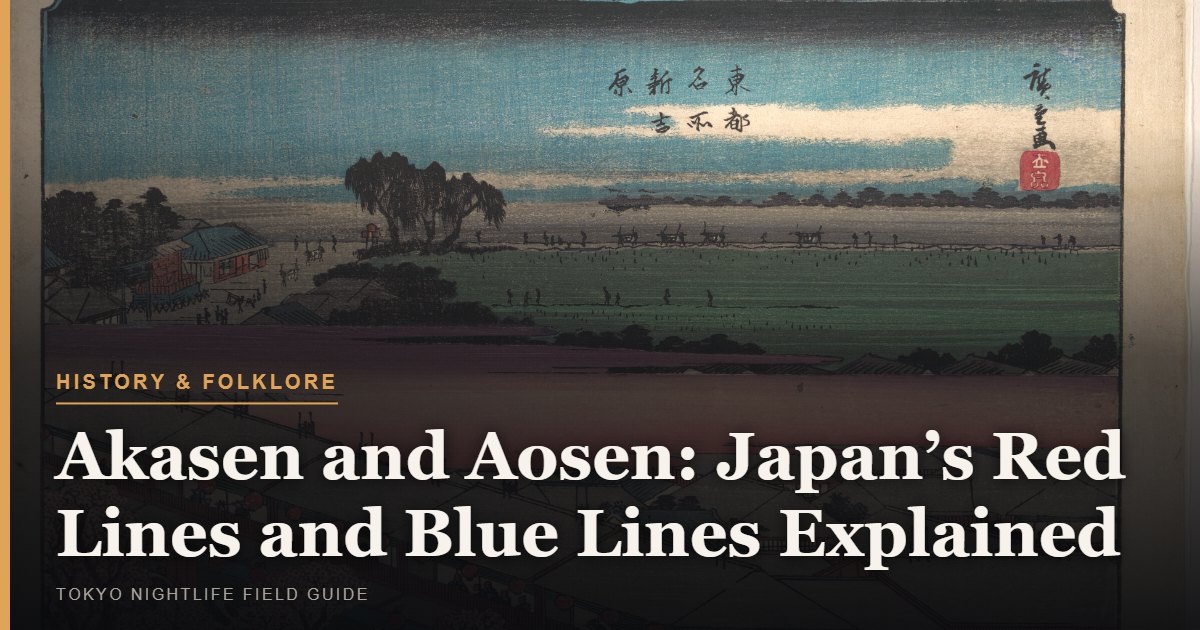
Between 1946 and 1958 Japan’s sex industry was officially abolished and openly operating. Red-line and blue-line districts, explained from the primary sources.
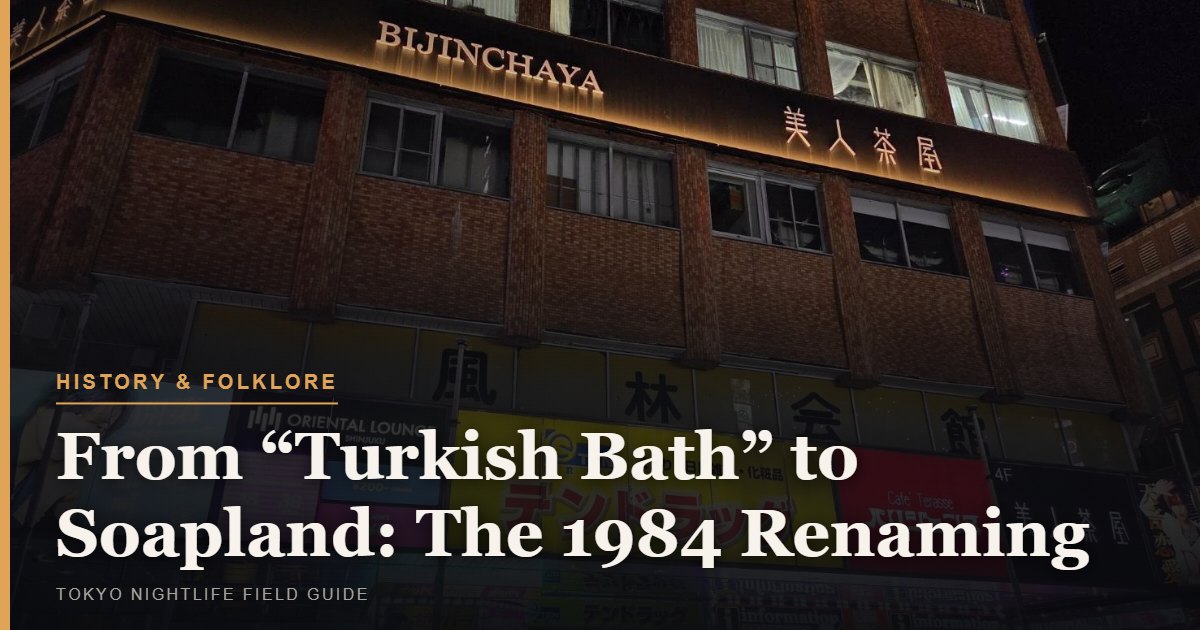
Japan renamed its “Turkish baths” soaplands on 19 December 1984. The law that reorganised the sector had already passed four months earlier.