New Year’s Eve is the one night of the year when parts of Tokyo’s rail network run straight through until morning — and January 1 to 3 is the one stretch when many of the city’s small bars and lanes are shut. Both are true at once, and most English guides describe only the first….
Kyabakura, girls bar, snack, lounge, host club or concept cafe? One legal line — settai — sorts them all. Licences, closing times and how the bill is built.
Japanese police must take your report but won’t collect a refund. What “civil matter” means, how to file before you fly, and how card disputes work.
Japan’s adult trade is five legal boxes, not twenty shop names. What the Fueiho and the 1956 Act actually say, with police counts for every category.
Japan’s drinking age is 20, but bars and clubs also turn away under-18s after 10 p.m. The laws behind ID checks, what ID works, and hotel passport copies.
Lost your passport or wallet in Tokyo after midnight? What to do tonight at a koban, how to block cards, and U.S., U.K., Australia, Canada embassy steps.
Keep walking, say “No thank you” once, don’t stop. What to say, how to move, what Tokyo law says about touting, and what to do if a tout won’t leave.
Twelve bar-scam warning signs from Tokyo police, Japan’s consumer center and four governments, in the order you meet them: street, door, table, bill.
Street touting (kyakuhiki) breaks Japan’s Fueiho, Tokyo’s nuisance ordinance and ward rules. What each bans, the penalties, and how often police enforce.
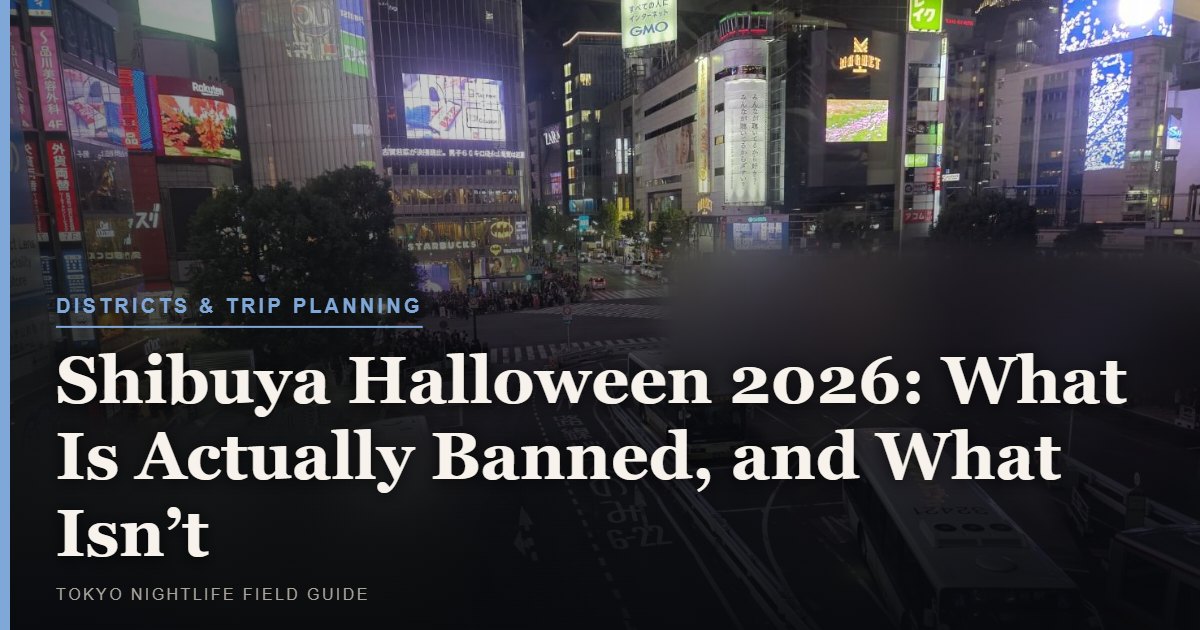
If you have seen the videos — thousands of people in costume flooding the Shibuya Scramble Crossing on October 31 — you should know that the event in those videos no longer exists. Shibuya City, the local government that runs the neighborhood, does not organize a Halloween event, has publicly asked visitors not to come…