Cash or Card in Japan’s Nightlife: How Much Yen to Carry
Japan is now a majority-cashless country by its own government’s measure — and that fact will not help you at 1 a.m. in a six-seat bar in Shinjuku. Carry both. For a night out in a Japanese entertainment district, the working assumption is cash in your pocket, a card as backup, and a figure you decided on before you left the hotel.
Acceptance in Japan is set venue by venue, not country by country, and the gap inside one ward is enormous. A major Kabukicho nightclub refuses cash outright and says so in its own terms of use. Bars a few minutes’ walk away often take cash only. Your transit card stops dead at a ¥20,000 balance. And whether an ATM will hand you yen at 3 a.m. depends less on how late the store stays open than on which logo is printed on your card.
This guide gives you the venue-by-venue table, the ATM table with each brand’s actual night hours, the official cashless figure with the year and the definition attached, and what Japanese law does — and does not — let you do when a bill comes back wrong.
The short answer
If you read nothing else:
- Carry cash, and carry a card. Neither one alone is enough for a night out.
- Decide your cash limit before you leave, and leave the rest in the hotel safe. The limit protects you from a venue, not from yourself.
- Ask at the door, before you sit down, how the place takes payment and what the total will be. Both questions, in that order. One answer without the other is not useful.
- If you hold American Express or Diners Club only, your ATM options in Japan narrow sharply. Bring a Visa or Mastercard as well.
- A transit card is a convenience, not a backup. JR East caps a Suica balance at ¥20,000, and at a station you top it up with cash.
What a night actually costs is a separate question, and we answer it in detail in our guide to what a night out in Tokyo costs by venue type. This page is only about how you pay.
Is Japan cashless now? The official number, and which year it is from
This is where advice about Japan often goes wrong: the figures circulating in English are real numbers attached to the wrong year, or to the wrong definition.
The Ministry of Economy, Trade and Industry (METI) calculates and publishes Japan’s cashless payment ratio once a year, for the preceding calendar year. On March 31, 2026, METI published the figure for calendar year 2025: 58.0 percent, or ¥162.7 trillion (METI news release, March 31, 2026; supporting data replaced June 18, 2026). Within that total, credit cards accounted for 82.7 percent of the value, code (QR) payments 10.2 percent, electronic money 3.7 percent and debit cards 3.4 percent.
There are now two official ratios, and for 2025 they differ by nearly twelve points
METI publishes the ratio on two bases, and the spreadsheet attached to that release gives both for every year from 2010 to 2025:
- Domestic indicator: 58.0 percent for 2025 (52.8 percent for 2024). Its denominator excludes imputed rent on owner-occupied housing, which METI puts at roughly ¥57 trillion, or about 17 percent of the wider measure.
- International-comparison indicator: 46.3 percent for 2025 (42.8 percent for 2024). This is the series used up to 2024 and kept in parallel so Japan can still be compared with other countries.
So if you have read that Japan is “about 43 percent cashless,” that is the international-comparison figure for 2024 — the older of the two indicators, and a year out of date. Both numbers come from the same release; neither is wrong; they measure different denominators. The government’s interim target is 65 percent on the domestic indicator by 2030, with 80 percent as the eventual goal.
The honest reading for a visitor is the one the ratio implies rather than the one the headline suggests. On the domestic measure, roughly four yen in every ten of the consumption METI measures did not move through those four cashless methods in 2025. METI does not break that remainder down, so it covers bank transfers and direct debits as well as cash. Where the cash part of it sits, the ratio does not say. Our own working assumption — stated as an assumption, because we found no statistic that measures it — is that small, independent, long-established night venues are where cash persists.
What each kind of night venue actually takes
The table below is the heart of this guide. We have separated what we could confirm from an operator’s own published terms from what is only a general pattern, because the difference matters when you are standing at a door.
| Venue type | Cash | Credit card | Transit IC | QR app | Basis |
|---|---|---|---|---|---|
| Convenience store (your 2 a.m. resupply) | Yes | Usually | Usually | Usually | General pattern |
| Large nightclub — ZEROTOKYO, Kabukicho | Refused | Yes | Yes | Yes | Operator’s own terms |
| Taxi (Tokyo Musen fleet) | Yes | Yes, incl. Amex, Diners, Discover | Yes — 9 IC brands, but not PiTaPa | Yes | Operator’s own page |
| Chain izakaya | Yes | Usually | Often | Often | General pattern |
| Chain karaoke box | Yes | Usually | Often | Often | General pattern |
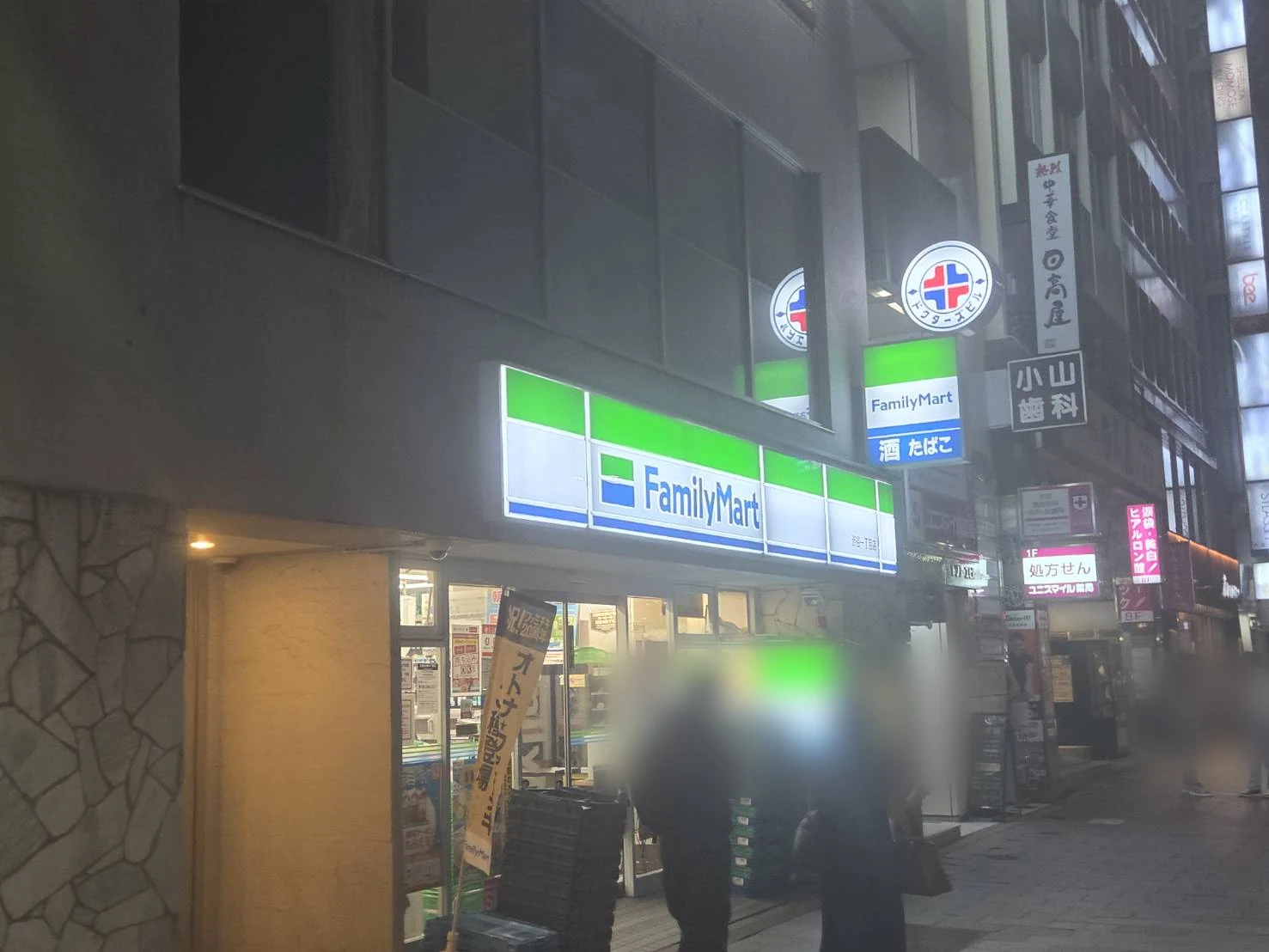
| Yokocho alley bar — Golden Gai, Omoide Yokocho | Yes | Often not | Rarely | Sometimes | Not confirmed — see §12 |
| Small counter cocktail bar | Yes | Mixed | Rarely | Sometimes | Not confirmed — see §12 |
| Snack bar / girls bar | Yes | Usually yes — but expect a 10–15% surcharge | Rarely | Sometimes | Editorial team, not a published source |
| Kyabakura (hostess club) | Yes | Usually yes — but expect a 10–15% surcharge | Rarely | Rarely | 9 in 10 list a card brand (directory count); surcharge is the editorial team’s figure |
| Ginza club (introduction or account based) | Yes | Usually yes — but expect a 10–15% surcharge | Rarely | Rarely | Editorial team, not a published source |
| Strip theater (admission at the door) | Yes | Mixed | Rarely | Rarely | Not confirmed — see §12 |
| Adult services (deriheru, soapland) | We do not publish payment terms for this category. See the map of Japanese adult business types for what the categories are. | Deliberately omitted | |||
The two ends of the range are both in the same ward
ZEROTOKYO, a nightclub in Shinjuku’s Kabukicho, states in its own terms: “ZEROTOKYO is a cashless entertainment facility (except for coin-operated lockers). We do not accept cash payments.” It lists credit cards, e-money and QR codes, and transportation IC cards (ZEROTOKYO, System). The same page sets a minimum age of 20 — if you want the detail on that, see our guide to age checks at Japanese nightlife venues.
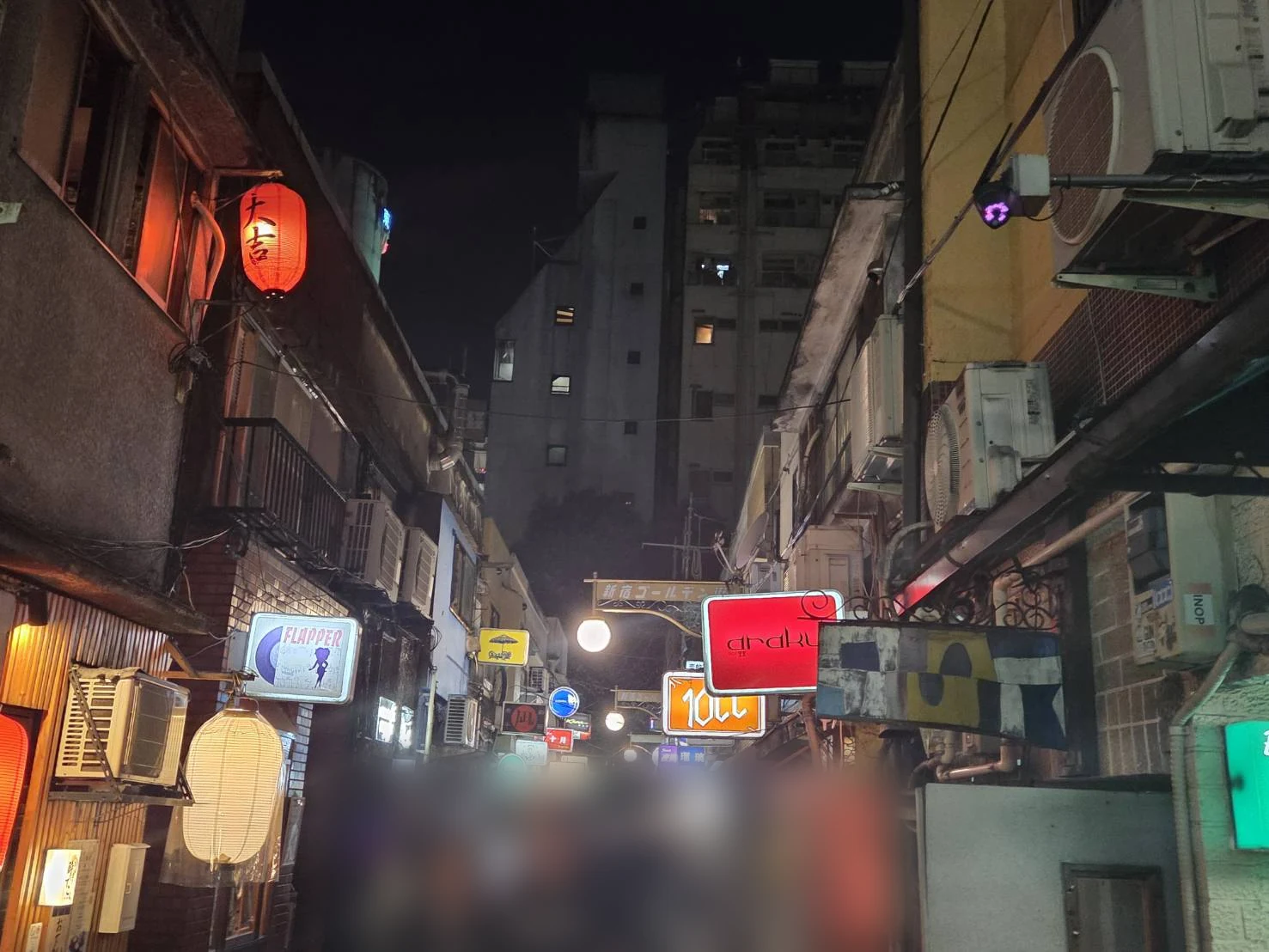
A short walk away, the bars of Golden Gai are individually run. There is no central operator and no published payment policy we could find. Cash is the safe assumption.
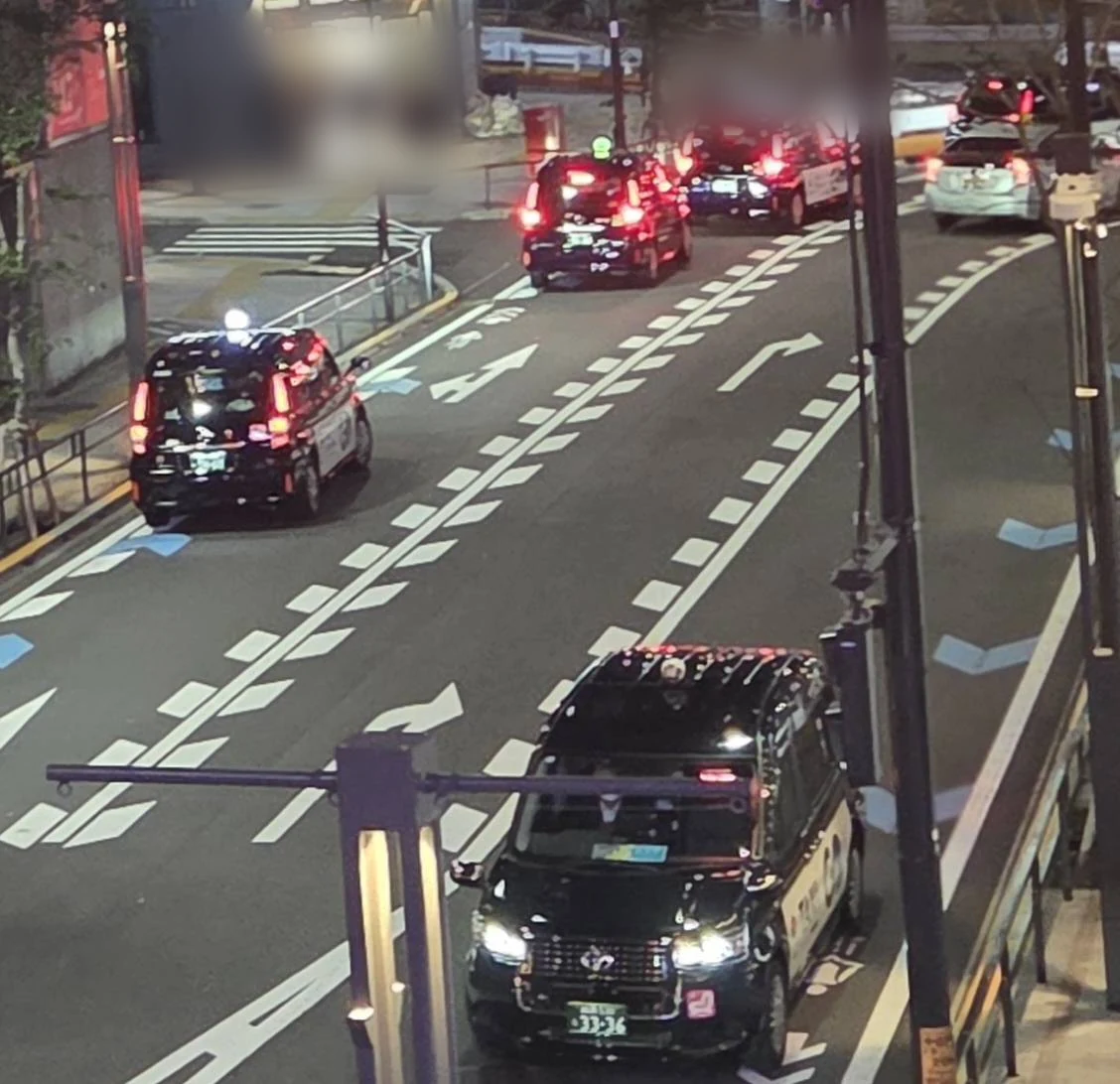
Taxis sit at the opposite end from the small bars. The Tokyo Musen cooperative, one of the city’s large radio-dispatch fleets, lists credit cards — including American Express, Diners Club and Discover — plus the nine nationally interoperable transit e-money brands (PiTaPa excepted), the mobile iD service across its whole fleet, and QR payment (Tokyo Musen Cooperative Association). In other words, the ride home is usually the easiest thing of the night to pay for.
For which venue type is which — what separates a kyabakura from a snack bar from a Ginza club — see our guide to the types of hostess venue in Tokyo.
Four ways to pay, and the ceiling on each one
Every payment method available to you in Japan has a hard upper bound. Knowing where each one stops is more useful than knowing which is “most accepted.”
| Method | What sets the ceiling | The number |
|---|---|---|
| Banknotes | Bank of Japan Act, art. 46(2) — notes pass as legal tender without limit | No limit in law |
| Coins | Act on Currency Units and Issuance of Coins, art. 7 — coins pass as legal tender only up to 20 times face value | 20 coins per denomination, per payment |
| Credit card | The venue’s own decision, plus your own credit line | No legal floor; the venue may simply decline |
| Transit IC (Suica) | Stored-value cap set by the issuer | ¥20,000 maximum balance |
| QR code apps | Sign-up requirements set by each app | Often unavailable to short-term visitors |
| ATM withdrawal | Operator’s per-transaction limit (see §6) | ¥50,000–¥100,000 per withdrawal |
The transit card is the trap, because it looks like the answer
Visitors from cities with a transit card that also buys coffee reasonably assume Suica will cover a bar tab. It will not, for two reasons that are both on JR East’s own page. The maximum balance is ¥20,000, and topping up at a station ticket machine is done with cash, in increments of ¥500, ¥1,000, ¥2,000, ¥3,000, ¥5,000 or ¥10,000, with a ¥500 deposit built into a new card (JR East, Suica). So the card cannot settle a ¥25,000 bill, and after the stations close you cannot reload it even if it could.
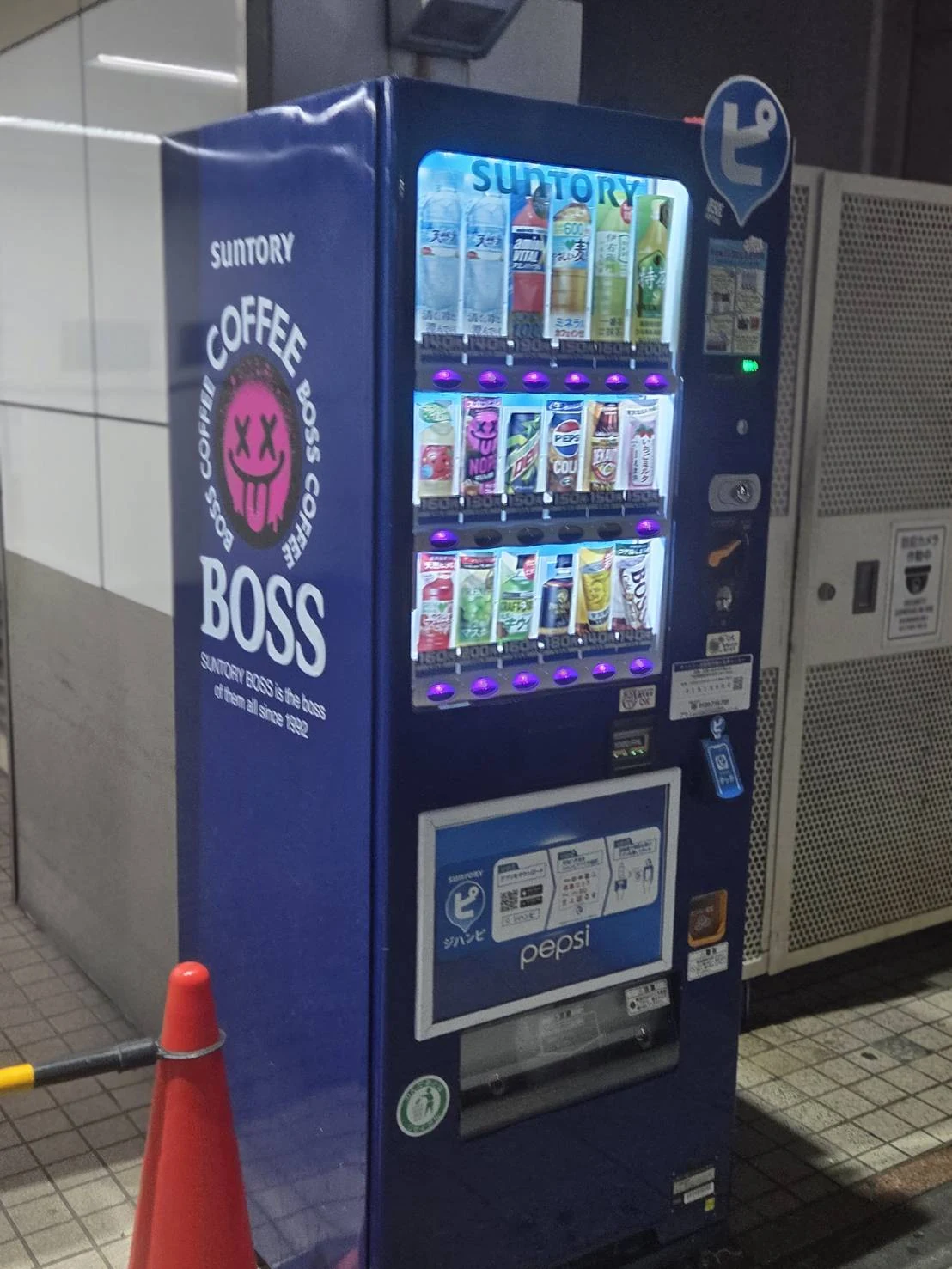
What a transit card is genuinely good for at night is the small stuff: a convenience store, a vending machine, a taxi, and — as ZEROTOKYO’s own terms show — the bar inside a venue that has gone fully cashless.
QR apps are built for residents
Japan’s code-payment apps carried ¥16.6 trillion in 2025 by METI’s count, so they are genuinely mainstream. We did not read each app’s sign-up terms, so we are not going to tell you which of them a short-term visitor can register for. Treat QR as something you may be able to use rather than something to rely on, and settle the question before you need it.
No law makes a bar take your card
The question comes up in every travel forum: if a business posts a price, can it refuse the card in your hand? We read the statutes rather than the forums.
Two provisions in Japanese law decide what counts as money, and that is all they decide.
- Bank of Japan Act, article 46, paragraph 2: banknotes issued by the Bank of Japan “pass as legal tender without limit” (e-Gov, Bank of Japan Act, read in the original Japanese; the English renderings of statute text on this page are ours).
- Act on Currency Units and Issuance of Coins, article 7: coins “pass as legal tender only up to twenty times their face value” (e-Gov). In practical terms, a creditor can refuse your twenty-first ¥100 coin in a single payment. If you have been feeding a vending machine all week, that is not a hypothetical.
What those provisions settle is what discharges a monetary debt. Neither says what a business must agree to accept before it serves you, and we did not find a provision in either act that imposes such a duty in either direction. So the practical answer is that acceptance is a commercial choice, and the place to resolve it is the doorway, not the bill.
Separately from payment method, licensed night venues in Japan operate under the Entertainment Business Act, which carries duties about displaying charges. Those duties are about price, not about whether a card reader exists.
ATMs after midnight: which machine takes your card, and when
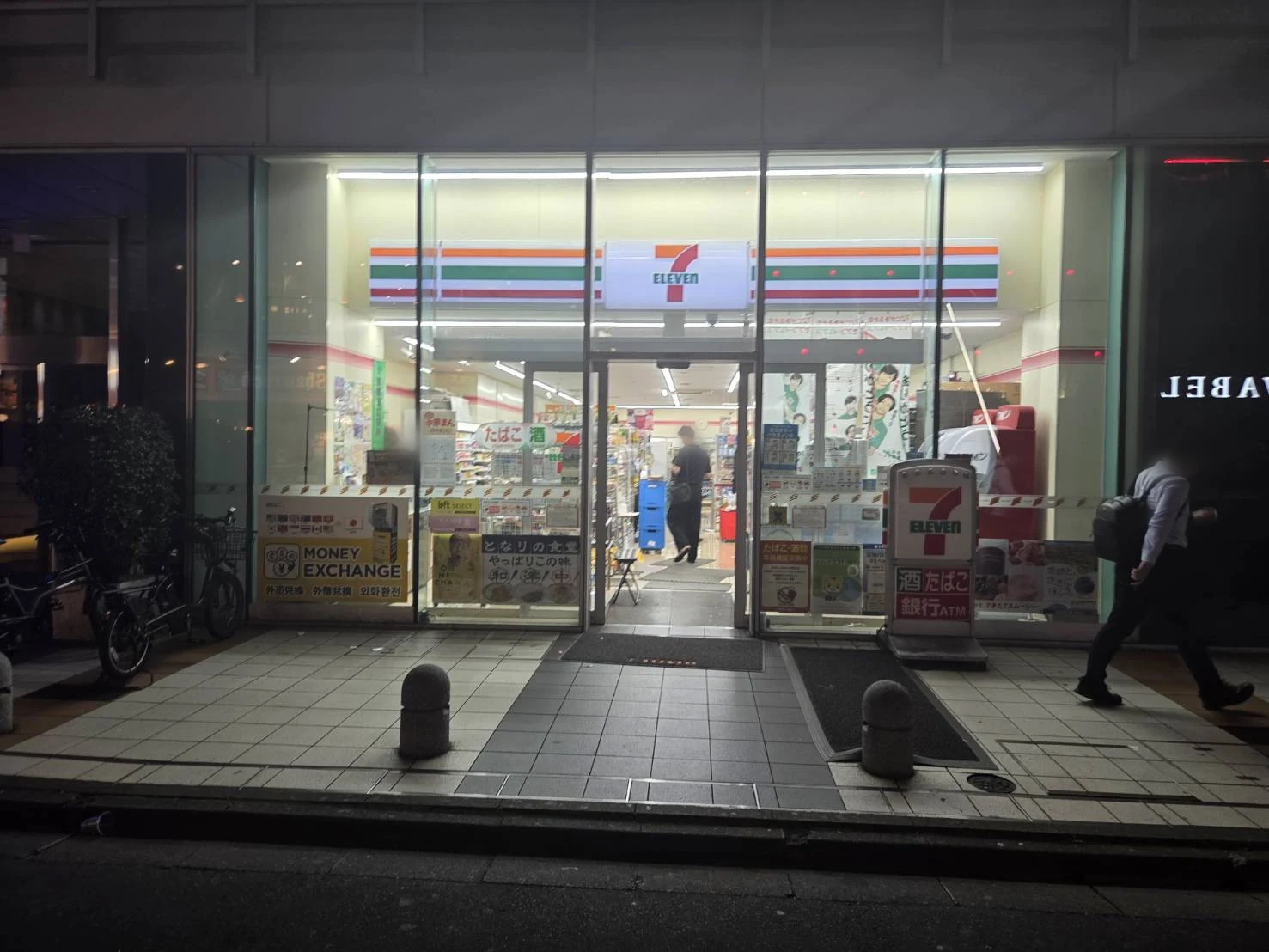
This is the part that decides your night. “Convenience store ATMs work with foreign cards” is true and almost useless, because the operators publish different brand lists, different night hours and different per-withdrawal limits. All four rows below come from the operators’ own English pages, read on October 12, 2026.
| Operator | Where | Brands listed | Night availability | Per withdrawal |
|---|---|---|---|---|
| Seven Bank | 7-Eleven stores and other sites; over 28,000 ATMs | Visa, Plus, Mastercard, Maestro, Cirrus, UnionPay, American Express, JCB, Discover, Diners Club | 365 days a year. Visa and Mastercard 00:00–24:00. Diners Club 00:05–23:55. American Express 00:05–23:50. JCB, Discover and UnionPay 00:10–23:50. | ¥100,000 (¥30,000 if the card is read by magnetic stripe) |
| Lawson Bank | Lawson stores; some airports and commercial sites | Visa, Plus, Mastercard, Maestro, Cirrus, JCB, UnionPay | 24 hours, minus a 15-minute maintenance stop between 3:00 and 4:00 a.m. Not every Lawson ATM handles overseas cards. | ¥50,000, in ¥10,000 increments |
| AEON Bank | Over 6,500 ATMs nationwide | Visa, Mastercard, JCB, Discover, China UnionPay | Card service hours are listed as 24 hours for all five brands; the bank tells you to check the ATM screen for the hours of operation that actually apply | ¥50,000 |
| Japan Post Bank | Post offices; compact ATMs inside FamilyMart and similar | Visa, Plus, Mastercard, Maestro, Cirrus, JCB, China UnionPay, Discover | Post office ATMs: Mon–Sat 7:00 a.m.–11:00 p.m.; Sundays, holidays, December 31 and January 1–3, 7:00 a.m.–9:00 p.m. Compact ATMs in FamilyMart: 0:05 a.m.–11:55 p.m., but from 7:00 a.m. on the third Monday of the month. | ¥50,000, plus a ¥220 ATM fee on some overseas cards |
Sources, in order: Seven Bank, Lawson Bank (page states “Information as of March 2026”), AEON Bank, Japan Post Bank.
Three things fall out of that table
First, American Express and Diners Club are the squeeze. Of these four operators, only Seven Bank lists either one. Neither Lawson Bank, nor AEON Bank, nor Japan Post Bank lists American Express or Diners Club at all. If that is your only card, your night-time cash supply in Japan runs through 7-Eleven.
Second, the post office is not an all-night option. A Japan Post Bank ATM inside a post office stops at 11:00 p.m. Monday to Saturday and 9:00 p.m. on Sundays and holidays. The company’s compact machines inside FamilyMart run almost around the clock instead.
Third, the calendar matters. Japan Post Bank’s English page warns that hours may differ during long holidays such as year-end, New Year and Golden Week, and already lists shorter hours for December 31 and January 1–3. If you are out on New Year’s Eve, draw your cash earlier in the day; our guide to New Year’s Eve in Tokyo covers what else changes that night.
One more thing worth knowing before you touch the keypad: Japan Post Bank’s page notes that with some overseas cards the ATM will let you fix the settlement amount in your home currency instead of yen. That is dynamic currency conversion, and it is almost always worse for you than letting your own issuer convert. Choose yen.
How much cash to carry
There is no official statistic for this, so what follows is built from the venues’ own posted prices. In October 2026 we read the standard price lists of 116 kyabakura across Shinjuku, Roppongi, Ginza, Ikebukuro, Shibuya and Ueno on a Japanese venue directory, taking the regular rate rather than the discounted first-visit set advertised beside it. Almost every venue states that tax and service charge are added on top of the figure it shows. The figures below are what one person should expect to have on hand, not a promise of what you will be charged.
The principle is firmer than the number, so start with the principle:
- Carry what you intend to spend, plus the fare home, and nothing more. Leave the rest in the hotel safe, with your passport.
- Carry a card you can use, and a second card you do not plan to use. One of the two should be Visa or Mastercard, for the ATM reasons above.
- Keep the cash and the cards in different pockets. If you lose one, you have not lost the night.
- Write down your own ceiling before you go out, as a number. A ceiling you set at 8 p.m. is worth more than one you try to set at 2 a.m.
| Your evening | Cash to have on hand, one person |
|---|---|
| A kyabakura in Shinjuku or Roppongi | ¥20,000–¥40,000. A single 60-minute set there is posted at ¥10,000–¥15,000 after 9 p.m.; add a nomination fee of about ¥3,000 and a service charge of 25–30%, and one set lands near ¥19,500 before drinks. Two sets doubles it. |
| A kyabakura around the other major stations (Ikebukuro, Shibuya, Ueno) | ¥15,000–¥25,000. Posted sets run ¥7,000–¥10,000 after 9 p.m. and cluster at ¥8,000; the nomination fee runs ¥2,000–¥3,000 and the service charge 20–25%. |
| A Ginza club | ¥50,000 is the floor; budget ¥50,000–¥100,000. Most are introduction-only, so this is a figure to carry only if you are going with someone who already holds an account. This one is the editorial team’s, not a price list — Ginza clubs do not publish one. |
For the actual arithmetic of what each kind of evening costs — admission, seat charges, drinks and service charge — our guide to what a night out in Tokyo costs breaks it down line by line. Build your cash figure from that, not from a round number someone put in a listicle.
Keep your passport and your money separate, and keep a photograph of the passport page on your phone. Our guide to losing a passport at night in Tokyo explains why that small habit saves a day.
Changing money, and why not to plan on doing it at night
Exchange counters are a daytime service. Airport counters, bank branches and staffed exchange shops keep business or retail hours; by the time a nightlife district is busy, the realistic option is an ATM from the table above.
In practice an ATM withdrawal is the simpler route for a visitor, because the rate is set by your card network rather than by a counter, and because the machine is open when the counter is not. The two things to control are the ones you can: withdraw in yen rather than your home currency, and make one larger withdrawal rather than four small ones, since both the operator’s fee and your issuer’s fee are usually charged per transaction.
If you are bringing cash in from home instead, note the customs rule: when you enter or leave Japan carrying means of payment worth more than ¥1,000,000 or the equivalent — cash in any currency, checks including traveler’s checks, promissory notes, securities — you must declare it (Japan Customs, FAQ 7305). Gold over 90 percent purity and 1 kg total weight is also declarable. Below that threshold there is no limit and nothing to file.
When the charge is wrong: what Japanese law gives you
This is the section where a familiar instinct — call the issuer, dispute the charge, let the chargeback do the work — maps onto a Japanese legal framework that is narrower than it looks.
The payment-stop defense exists, and probably does not cover you
Japan’s Installment Sales Act gives a buyer a right that looks exactly like a chargeback. Article 30-4 lets a purchaser assert against the credit company any grounds that have arisen against the seller or service provider, and paragraph 2 voids any special term contrary to it that is disadvantageous to the buyer (e-Gov, Installment Sales Act, version in force from June 1, 2025, consulted in the original Japanese). Two limits sit around it:
- It applies to “comprehensive credit purchase intermediation,” and article 2, paragraph 3, item 1 of the same Act expressly excludes payment received by a predetermined date not more than two months after the contract. An ordinary single-payment card transaction, billed to you the following month, falls into that exclusion.
- Paragraph 4 switches the right off below a threshold set by Cabinet Order, and article 21(1) of the Order sets that threshold at ¥40,000 (e-Gov, Order for Enforcement of the Installment Sales Act).
We are describing what the statute says, not giving legal advice, and we are not in a position to tell you how a given issuer would treat your case. The practical consequence, though, is clear enough to act on: do not assume Japanese law will reverse the charge for you. Whatever protection you have most likely comes from your own card network’s rules and your own issuer, under the law of the country that issued the card. So call your issuer the same night, while the transaction is still pending, and ask what its own dispute process requires.
What to do in the first hour
- Photograph the bill and the posted price list before you leave, and ask for an itemized receipt.
- Do not move to a second venue, and do not go to an ATM with staff. See the next section for why that is the single most important line here.
- Call 110 from where you are if you are being prevented from leaving or the amount is being extracted under pressure. Our guide to the emergency numbers that work in English covers what happens on that call.
- Call your card issuer the same night, using the number on the back of the card, and note the time of the call.
- File the police report in person before you leave Japan. What the police will and will not do is set out in our guide to reporting a nightlife scam to Tokyo police.
The consumer hotline that takes English
Japan has a national telephone service for exactly this situation. The National Consumer Affairs Center of Japan runs the Consumer Hotline for Tourists on 03-5449-0906, Monday to Friday, 10:00 a.m.–12:00 p.m. and 1:00 p.m.–4:00 p.m. (closed weekends, national holidays and December 29 to January 3), in English, Chinese, Korean, Thai, Vietnamese, French and Japanese. Its own page names “stores, restaurants, bars, transportation, or hotels” as in scope — and states plainly that it “does not have legal enforcement authority or supervisory powers over businesses” and that it advises callers so they can negotiate for themselves (Consumer Hotline for Tourists).
It is also busier than it has ever been. The Center reported on August 5, 2026 that the hotline took 698 inquiries in fiscal 2025 — a record, and 136 percent of the 513 it took in fiscal 2024 — of which 493 came from visiting tourists (National Consumer Affairs Center of Japan). The hotline has been running since December 2018.
Note the hours against the problem. A bill disputed at 2 a.m. cannot be taken to this hotline until 10 a.m. That is an argument for settling the price question at the door.
The walk to the ATM: where a payment question turns into a police matter
Everything above is about convenience. This section is not.
The Tokyo Metropolitan Police Department publishes a crime-prevention page for visitors in English, updated February 13, 2026, with a section headed “Blackout and credit card fraud.” It describes being approached on the street, taken to a particular bar, falling asleep after a strong first drink, and waking with an emptied wallet and a misused credit card. On the same page, describing its enforcement against street touts, the MPD writes: “In some cases, bars intoxicated customers with spiked drinks, before taking them to an ATM, and made them withdraw money to settle their bills” (Tokyo Metropolitan Police Department).
That is the sentence that connects this guide’s subject to its stakes. The limit on your cash is a limit on one night’s loss. The account behind your card has no such limit, and a walk to an ATM in company is how the second one gets reached.
The rule that prevents almost all of it
Do not follow a street tout into any venue — a bar, an izakaya, a club, a hostess bar or an adult business. Not “be careful with them.” Do not go. The MPD’s own warning maps for illegal street touts and scouts cover seven areas — Shinjuku’s Kabukicho, Kinshicho, Shimbashi, Shibuya, Ikebukuro, the Ueno and Yushima area, and Tachikawa — and the page states that many credit card frauds and rip-offs have taken place at restaurants and bars that illegal touts brought the victims to. We set out the full reasoning, including what the law says about touting, in our guide to why you never follow a tout in Japan, and the refusal phrases themselves in how to refuse a tout in Kabukicho.
Two companion pieces are worth having open on your phone: the districts where rip-off bars cluster, and the red flags to watch for once you are inside. On drinks specifically, see drink spiking in Tokyo nightlife.
A free information center is not a tout
One thing visitors conflate, and should not. A muryo annaisho — a free information center — is a fixed, registered shopfront that you walk into of your own accord, and it is a reasonable way to look for a hostess or adult venue. It is not someone who selected you out of the pedestrian flow. The practical difference is the direction of the approach. Whichever route you take, confirm the total price with the venue itself before you go in, and confirm whether it takes cards in the same breath. Our guide to how free information centers work explains the system and what to ask.
Ten minutes before you leave the hotel
None of this works as a decision made at the bar. It works as ten minutes in the room.
- Check which logos are on your cards. If none of them says Visa or Mastercard, plan your cash around 7-Eleven.
- Draw your cash now, at a machine you chose, not at 2 a.m. at a machine someone walked you to. Round up to the operator’s per-withdrawal limit so you do not pay two fees.
- Set your ceiling as a number, and leave the balance in the safe with your passport.
- Top up the transit card to cover the ride home while the station machines are still open.
- Save your card issuer’s international collect number in your phone, along with 110 and 119.
- Decide your first venue before you walk out, and look up whether it takes cards. A venue that will not answer that question by email or on its own site is telling you something.
- Agree on a meeting point if you are out with other people, because phones die and districts are loud.
The last item is the one that covers the most ground: if a venue or an operator will not tell you the total and the accepted payment methods in advance, in writing, choose a different one. That applies to a bar, a club, and any kind of outcall booking.
This guide is published by the team behind Pianissimo, a Tokyo outcall service. If you want to ask us those two questions directly before booking anything, our contact page is here.
What we could not confirm
Several things a reader would reasonably want are not in this guide, and the reason is always the same: we could not find a source we were willing to stand behind.
- An official figure for how much cash to carry. No public body publishes one. The ranges in §7 are built from the standard price lists of 116 kyabakura on one Japanese venue directory, read in October 2026, plus the editorial team’s judgment for Ginza, where no price list is published. They are a reading of posted prices, not a survey of what people actually spend.
- Card acceptance rates by venue type. No trade association publishes one. The closest thing we have is a count of our own: of the 138 kyabakura listed on one Japanese venue directory in October 2026, 124 named at least one card brand they accept — about nine in ten. That is a count of what venues advertise, not of what happens at the table, and it covers kyabakura only. The rows in §3 for snack bars, girls bars and Ginza clubs remain our estimate; the rows still marked not confirmed are general patterns, not measurements.
- The size of a card surcharge at a hostess club. We put it at 10 to 15 percent in §3 and §7 on the editorial team’s own reading of the trade; we could not verify it from any operator’s published terms, and most venues do not state it before you pay.
- How often foreign visitors actually hit a payment problem. The Japan Tourism Agency runs an annual survey of the reception environment for inbound visitors, and the fiscal 2025 edition is published as a PDF. We could not extract its text on the day of writing, so we have not quoted any figure from it.
- Cash in circulation. We wanted a Bank of Japan figure for banknotes in circulation alongside METI’s ratio. The English statistics page we tried had moved, and we could not read the PDF releases, so we left the point out rather than quote a number from memory.
- Dollar conversions. Every amount on this page is in yen. We did not publish US dollar equivalents because we could not retrieve the Bank of Japan’s reference rate on the day of writing, and an undated conversion is worse than none.
- Which QR payment apps a short-term visitor can actually register for. We did not read each app’s own sign-up terms, so we have not stated them.
- Payment terms for adult services. Omitted deliberately, not for lack of a source.
Frequently asked questions
How much cash should I carry for a night out in Tokyo?
No public body publishes a figure, so ours comes from the venues’ own posted prices. For a kyabakura in Shinjuku or Roppongi, have ¥20,000–¥40,000 on hand per person; around Ikebukuro, Shibuya or Ueno, ¥15,000–¥25,000; for a Ginza club, treat ¥50,000 as the floor. Carry what you plan to spend plus the fare home, carry a Visa or Mastercard as well, keep cash and cards in separate pockets, and leave the balance in the hotel safe.
Can a bar in Japan refuse my credit card?
In practice, yes, and many small bars do. Japanese currency law settles what counts as money for paying a debt — Bank of Japan notes are legal tender without limit, coins only up to twenty per denomination — but we did not find a provision obliging a business to accept any particular method before it serves you. Ask at the door.
Can I pay for drinks with my Suica or Pasmo?
Sometimes, within limits. It works as e-money at convenience stores, vending machines, Tokyo Musen taxis, and at venues that have gone cashless. But JR East puts the maximum Suica balance at ¥20,000 and station top-ups are made with cash, so the card cannot settle a larger bill and cannot be reloaded once the stations close.
Which convenience store ATM works at 3 a.m. with a US card?
Seven Bank ATMs in 7-Eleven stores run 00:00–24:00 for Visa and Mastercard, 00:05–23:50 for American Express and 00:10–23:50 for JCB, Discover and UnionPay. Lawson Bank runs 24 hours except a 15-minute stop between 3:00 and 4:00 a.m. Japan Post Bank’s compact ATMs in FamilyMart run 0:05 a.m.–11:55 p.m., while its post-office machines close at 11:00 p.m. Only Seven Bank lists American Express or Diners Club.
Is there a limit on how much cash I can bring into Japan?
No limit, but there is a declaration threshold. Japan Customs requires a declaration when you enter or leave carrying means of payment worth more than ¥1,000,000 or the equivalent — cash in any currency, checks including traveler’s checks, promissory notes and securities. Gold over 90 percent purity exceeding 1 kg is also declarable.
The bar charged my card far more than the posted price. Can I get it reversed?
Do not assume Japanese law will do it. The Installment Sales Act’s payment-stop defense in article 30-4 looks like a chargeback, but article 2(3)(i) of the same Act excludes payment received within two months of the contract — which covers an ordinary single-payment card transaction — and paragraph 4 switches the right off below ¥40,000. Your realistic route is your own card network and issuer, so call the issuer the same night. For advice in English during business hours, the Consumer Hotline for Tourists is on 03-5449-0906, Monday to Friday. If you were prevented from leaving, or marched to an ATM, call 110.