How to Refuse a Tout in Kabukicho Without Any Japanese
The fastest way to refuse a tout in Kabukicho is to keep walking, say “No thank you” once, and not stop. You do not need any Japanese to do it, and you do not need to be polite for longer than one sentence. If you want a Japanese phrase, kekkō desu (結構です, “I’m fine, no thanks”) works everywhere.
You are also on firm ground. Street touting is prohibited in Kabukicho by a Tokyo metropolitan ordinance, by the national nightlife law known as the Fueiho and by Shinjuku City’s own anti-touting ordinance. The Shinjuku Police Station’s English leaflet puts it plainly: customers who follow street touts are increasingly overcharged in bars, “although touting on the street is prohibited by the law in Shinjuku” (Shinjuku Police Station).
This guide covers what to say, how to move, what the law actually says, what happens to people who follow a tout, and what to do if one will not leave you alone.
The short version
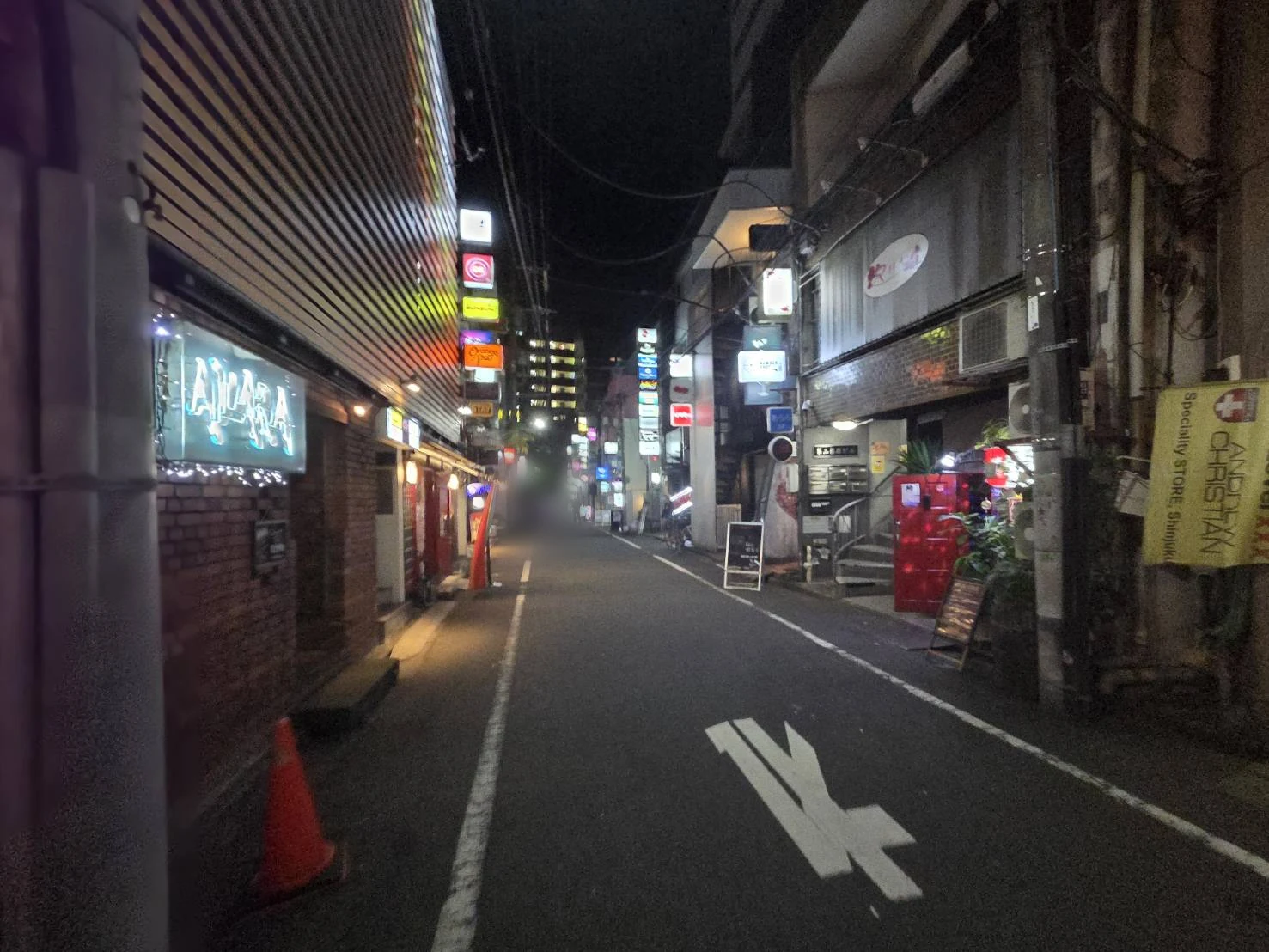
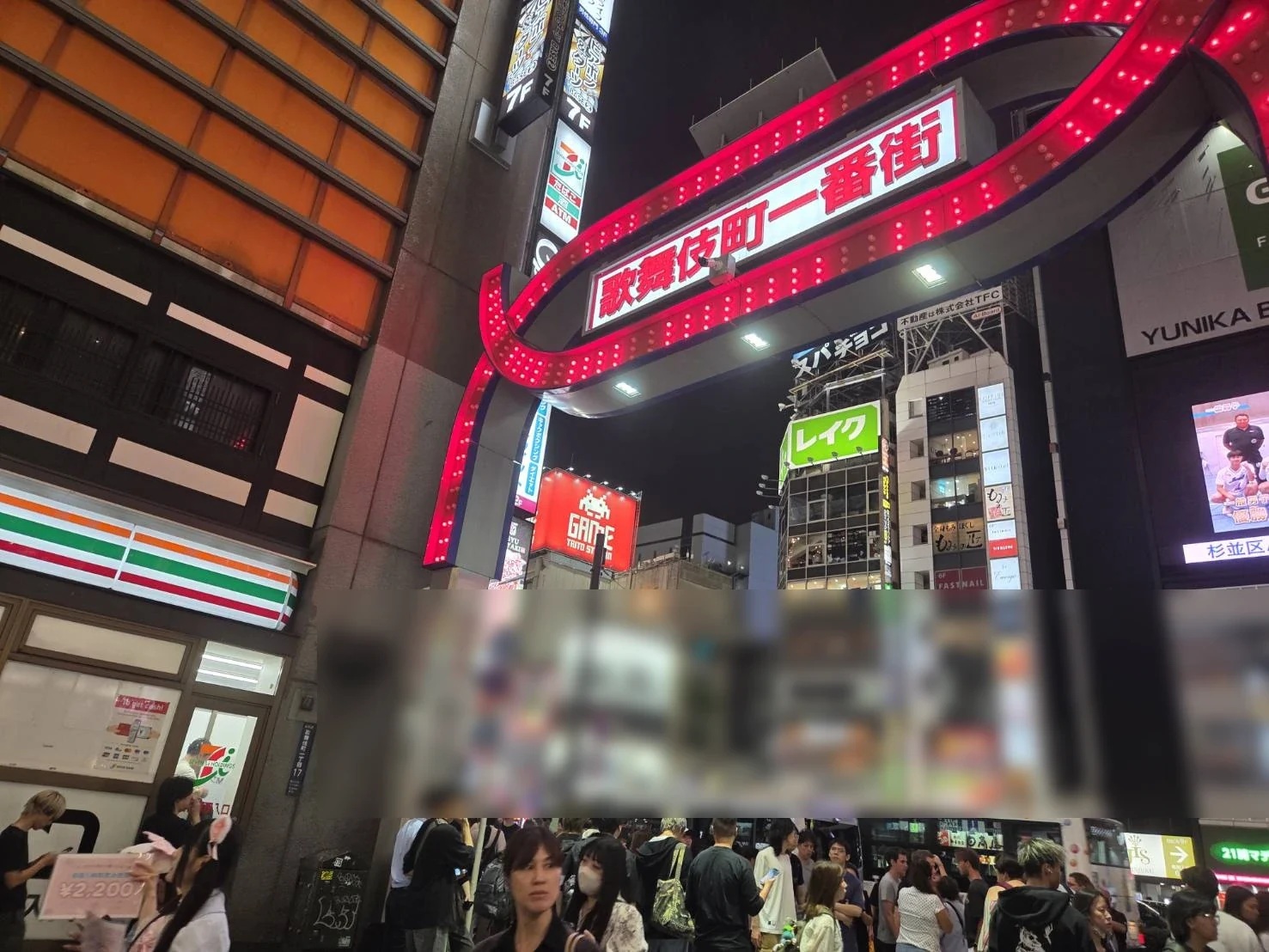
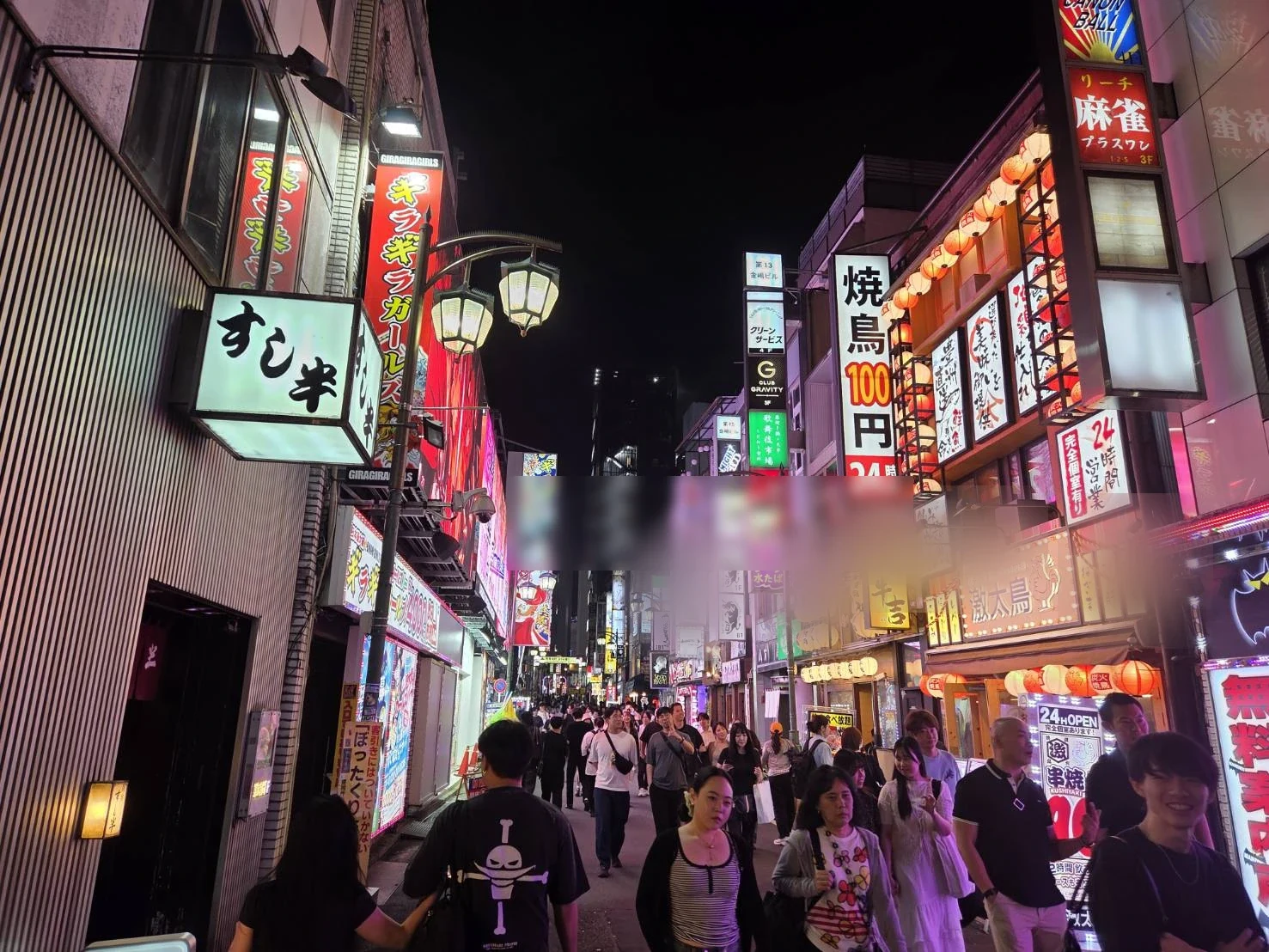
Kabukicho is a busy entertainment district. A recurring nuisance for visitors is the street tout, called kyakuhiki (客引き, literally “customer-pulling”). A tout falls into step beside you, usually speaks some English, and offers a bar, “girls,” cheap drinks or an all-you-can-drink deal.
- Do not stop walking. Stopping turns a pitch into a conversation.
- Say one short phrase: “No thank you,” or kekkō desu.
- Do not negotiate, ask prices or ask where the bar is. Any question is read as interest.
- As a rule, never follow a tout to a bar, club or any other venue.
- If the tout keeps following, head for a bright main road, a police box (kōban) or dial 110.
The rule underneath all of this is simple. A legitimate venue in Kabukicho does not need to send someone down the street to collect you. Tokyo police, warning about touts who target people who have been drinking, put it just as directly: “never follow them” (our translation) (Metropolitan Police Department).
What to say (and what not to say)
You need one phrase, not a conversation. Pick whichever feels natural and use it every time.
| Phrase | Pronunciation | Meaning | When to use it |
|---|---|---|---|
| No thank you. | — | No thank you | Any tout who opens in English |
| 結構です | kek-KOH dess | “I’m fine” / “No, thanks” | The standard polite refusal; works in any situation |
| いりません | ee-ree-MA-sen | “I don’t need it” | Firmer, if the first refusal is ignored |
| 行きません | ee-kee-MA-sen | “I’m not going” | When the pitch is “come with me” |
| やめてください | ya-meh-teh ku-DA-sai | “Please stop” | If someone touches you or blocks your path |
Avoid “daijōbu desu”
Many visitors learn daijōbu desu (大丈夫です) as a polite “no thanks.” It is common in shops, but its literal sense is “it’s fine” or “I’m OK,” and in a sales pitch it can be heard as agreement. With a tout, choose a phrase that cannot be taken as a yes. Kekkō desu and irimasen are both unambiguous. (Phrases for a dispute inside a venue are a different matter; GaijinPot’s guide to touts lists several (GaijinPot Blog).)
Do not explain yourself
“I’m meeting friends,” “Maybe later” and “How much is it?” all give the tout something to work with. A reason invites a counter-offer; a question invites a price that will not match the bill. One phrase, no reason, keep moving.
How to refuse without breaking stride
Body language does most of the work, and it is the same in any language.


Keep your pace and your eyes forward
Walk as if you already know where you are going, even if you are checking a map. If you need to look at your phone, step into a convenience store or a lit station entrance rather than stopping in the middle of a side street.
Eye contact and a smile read as an opening. A brief glance to acknowledge someone is fine; a sustained look is what keeps a tout walking next to you. Keep your gaze on where you are heading.
One gesture, one phrase
A small side-to-side wave of the hand in front of your face is widely understood in Japan as “no, thank you.” Combine the gesture with your phrase and do not slow down. You do not need to turn your body toward the person.
If the tout continues, you can repeat the same phrase, a little more firmly. Do not escalate to argument, and do not touch the person. Your goal is to be boring to them, so that they move on to the next passer-by.
The common openers, and the right response
Touts use a small number of scripts. Recognizing the script is half of refusing it.
| What you hear | What it usually means | Your response |
|---|---|---|
| “Hello, friend! Where are you from?” | Small talk to get you to stop | Keep walking. “No thank you.” |
| “Bar? Cheap drink! All you can drink!” | A low headline price; extras are not included | “No thank you.” Do not ask the price. |
| “Girls? Massage? Cabaret?” | A venue you cannot check in advance | Kekkō desu. Do not answer the question. |
| “Just look, no charge to see” | An invitation to go inside or upstairs | Ikimasen (“I’m not going”). |
| “Where are you going? I can show you” | An offer to guide you to a venue | Keep your route to yourself. Use your own map. |
| Walking beside you after you said no | Persistence; this can itself be an offense | Head to a main road or a kōban. Call 110 if needed. |
Not everyone calling out is a tout
Staff greeting passers-by from the doorway of a restaurant or an arcade is a normal part of Japanese street life. Shinjuku City defines the touting it prohibits as singling out a specific person from among passers-by and inviting them to an izakaya-style bar, karaoke venue, cabaret club, host club or similar business (Shinjuku City). The practical line for a visitor is simple: anyone who leaves the shopfront to walk with you is the person to refuse.
The storefront “free information” offices (muryō annaijo) found in Kabukicho are a different thing from touts. They operate from fixed premises, and you walk in by your own choice instead of being picked out on the street. If you want a recommendation, an information office is a far safer starting point than a tout. Wherever you end up, ask for the total price, including any cover, table or service charge, before you sit down.
You are not being rude: touting here is illegal
Some visitors hesitate to brush someone off, because Japan has a reputation for courtesy. In this case you can drop that worry. Three separate sets of rules restrict street touting in Kabukicho, and the most persistent behaviors are offenses in their own right.
Tokyo’s nuisance prevention ordinance
Tokyo’s Ordinance No. 103 of October 11, 1962, usually called the meiwaku bōshi jōrei (nuisance prevention ordinance), bans several kinds of “improper touting” in public places. Article 7(1)(iv) prohibits persistent touting of any kind, such as “grabbing a person’s body or clothing, taking their belongings, blocking their way, or following them around” (our translation). Violations are punishable under Article 8(4)(v) by a fine of up to ¥500,000, or penal detention or a petty fine (Tokyo Metropolitan Government, Reiki-Base). “Penal detention” (kōryū, confinement for 1 to 29 days) and “petty fine” (¥1,000 up to, but not including, ¥10,000) are the government’s official translations of the Penal Code terms (Japanese Law Translation, Penal Code Arts. 16-17).
Article 7(3) goes further in designated areas. It prohibits waiting in public view for people to tout for sex-related businesses and similar purposes. The Tokyo Public Safety Commission designated Kabukicho 1-chome and 2-chome under this rule in its Notice No. 181, dated June 1, 2012 (Metropolitan Police Department). A police officer can order someone to stop, and ignoring the order carries a fine of up to ¥200,000, or penal detention or a petty fine, under Article 8(6).
The Fueiho (national nightlife law)
Japan’s national law regulating nightlife businesses (Act No. 122 of 1948) is officially translated as the Act on Control and Improvement of Amusement Business and usually called the Fueiho (Japanese Law Translation). It forbids licensed entertainment businesses such as hostess clubs from touting at all. Article 22(1)(i) bans touting “in connection with the business,” and Article 22(1)(ii) bans standing in someone’s way or following them on a road or other public place in order to tout. Article 28(12) applies the same two rules to storefront sex businesses. Under Article 53(i), the person who commits the violation faces up to six months’ imprisonment, a fine of up to ¥1,000,000, or both (e-Gov Laws).
Shinjuku City’s anti-touting ordinance
Shinjuku City’s Ordinance on the Prevention of Touting in Public Places (Ordinance No. 32 of June 19, 2013) took effect on September 1, 2013 (Shinjuku City newsletter, August 25, 2013). It was amended from April 1, 2016, with penalties in force from June 1, 2016 (Shinjuku City). It covers touting, street “scouting” for nightlife work, and waiting in the street to do either. Article 7 says that no one may tout in a public place. In the designated districts, the ward first gives guidance, then a warning, then a recommendation (Arts. 10-12). People who ignore a recommendation can be publicly named (Art. 14), and anyone who keeps touting in a designated district after a recommendation faces an administrative fine of up to ¥50,000 (Art. 19) (Shinjuku City, full text of the ordinance). That is the highest administrative fine the Local Autonomy Act allows a local ordinance to set (Art. 14(3)) (e-Gov Laws).
The ordinance also reaches the businesses behind the touts. They must not admit customers brought in by a tout (Art. 8), and when an employee is fined, the business can be fined too (Art. 20). The designated districts are Kabukicho 1-chome and 2-chome, Shinjuku 2-chome and 3-chome, and Nishi-Shinjuku 1-chome.
| Rule | What it prohibits | Maximum penalty |
|---|---|---|
| Tokyo nuisance prevention ordinance, Art. 7(1)(iv) | Persistent touting: grabbing body or clothes, taking belongings, blocking the way, following | Fine up to ¥500,000, or penal detention or a petty fine (Art. 8(4)(v)) |
| Same ordinance, Art. 7(3) and 7(4) | Waiting in public view to tout for sex-related businesses in designated areas, including Kabukicho 1-2 chome | Police stop order; defying it, fine up to ¥200,000, or penal detention or a petty fine (Art. 8(6)) |
| Fueiho (Act No. 122 of 1948), Art. 22(1)(i)-(ii) and 28(12)(i)-(ii) | Touting for licensed nightlife and storefront sex businesses; blocking or following people to tout | Up to 6 months’ imprisonment, fine up to ¥1,000,000, or both (Art. 53(i)) |
| Tokyo “rip-off” ordinance (No. 196 of 2000), Art. 4 | Misleading people about prices when soliciting; collecting charges with rough or intimidating behavior | Up to 6 months’ imprisonment or fine up to ¥500,000 (Art. 11(2)(iii)) |
| Shinjuku City touting ordinance (No. 32 of 2013), Arts. 7-8 | Touting, street scouting and waiting to do either, in public places; businesses admitting touted customers | Public naming (Art. 14); administrative fine up to ¥50,000 for violations in designated districts after a recommendation (Art. 19) |
None of these rules punishes you for walking away. The legal burden sits entirely with the tout and the business.
What happens if you follow one
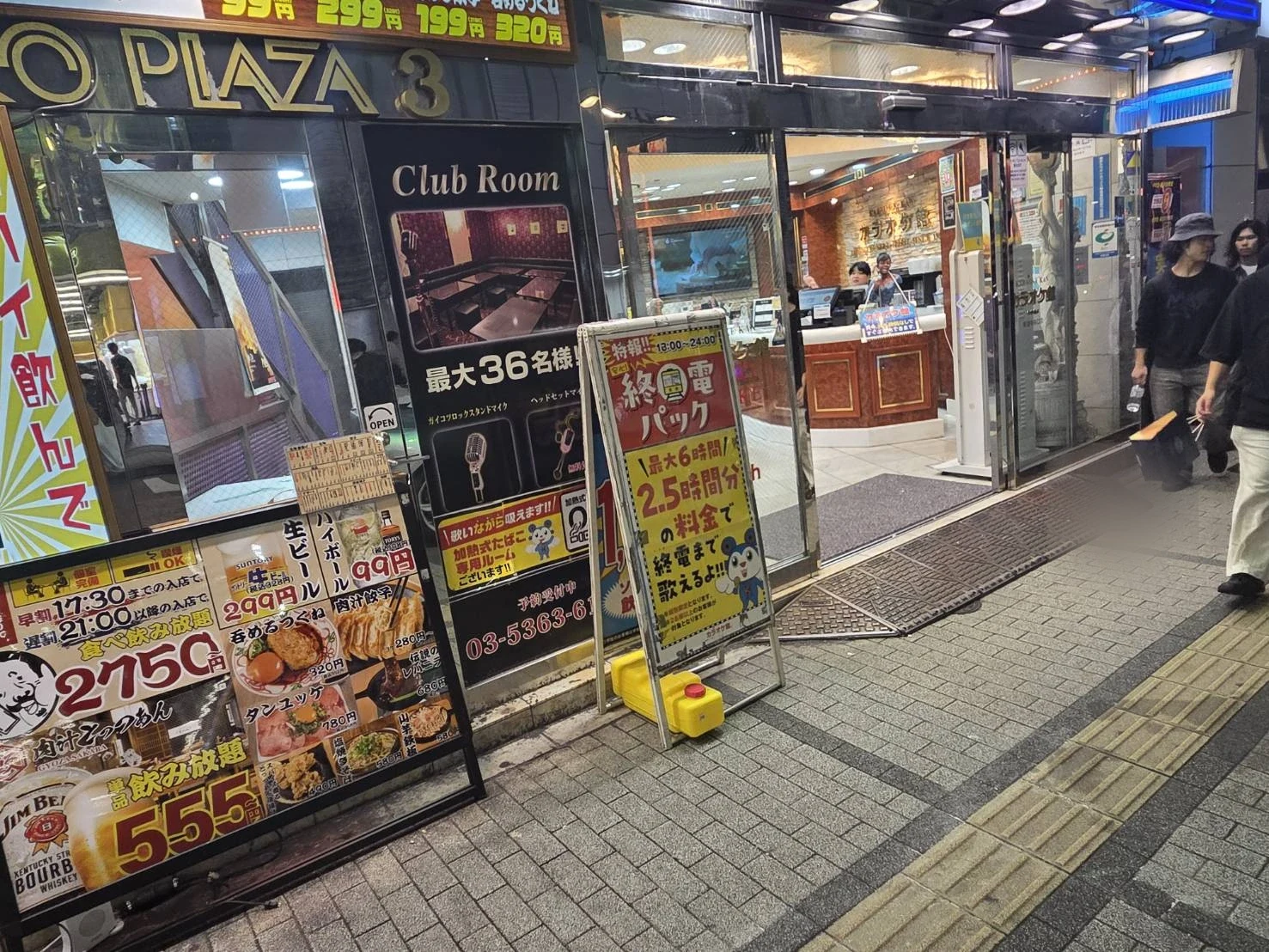
The official warnings describe the same sequence again and again. It is worth knowing so that you can recognize the first step.
The pattern the police describe
- A tout offers something cheap or easy: a low flat price, all you can drink, a “just look” invitation.
- You are taken to a venue you could not check in advance, often upstairs or away from the main street.
- Charges accumulate that were not part of the pitch. Shinjuku police warn that an all-you-can-drink plan covers only the customer’s own drinks, so “you will be charged separately from the plan if you order drinks for hosts/hostesses in a bar” (Shinjuku Police Station).
- The bill arrives, far beyond what you expected, sometimes with pressure to pay by card or to withdraw cash.
What the governments of visitors’ home countries report
The British government’s travel advice says that “most British victims have reported being targeted in Kabukicho,” approached in English by street touts, and tells travelers: “Do not follow street touts into bars.” It also reports drink spiking and credit card fraud, with victims waking up to “large amounts of money billed to their credit card” (GOV.UK).
The U.S. State Department names Kabukicho among the nightlife districts where visitors should be especially cautious. It notes that U.S. citizens have reported being threatened with guns or knives and forced to pay excessive bills or withdraw money from ATMs (U.S. Department of State).
Tokyo police describe a related pattern aimed at people who have been drinking: touts approach intoxicated customers, and the venue serves strong drinks until the customer passes out. The victim discovers high-value card transactions only later (Metropolitan Police Department). If you have been drinking, that is the moment to be most firm.
When a tout will not let go
Most touts give up after one or two refusals. If one does not, change the setting rather than the conversation.
Get to a bright main road or a police box
Walk toward Yasukuni-dori, the wide avenue along Kabukicho’s southern edge, or toward the station. Wide, busy, well-lit streets are where persistence stops working: there are more people, more shops to step into and more chance of a police patrol.
Japan’s neighborhood police boxes are marked 交番 and usually “KOBAN” in Latin letters. You do not need to be the victim of a crime to walk in. Shinjuku police say that if you cannot make a call, you should go to the nearest police box (Shinjuku Police Station).
Call 110
110 is Japan’s police emergency number, and you can use it in English. The Metropolitan Police Department’s English guidance says: “If you do not speak Japanese, a police interpreter will be on the line to assist you” (Metropolitan Police Department). For a non-urgent question about who to contact, the police advice line is #9110.
If a person is grabbing you, blocking your way or following you after you have refused, that is exactly the conduct Article 7(1)(iv) of the Tokyo ordinance describes. You are not overreacting by calling.
Three phrases are worth saving on your phone for this moment:
- Tasukete kudasai (助けてください): “Please help me.”
- Keisatsu o yonde kudasai (警察を呼んでください): “Please call the police.”
- Kyakuhiki ni tsukimatowarete imasu (客引きにつきまとわれています): “A tout is following me.” Useful at a kōban.
If you have already gone inside
If you have followed a tout and the bill is not what you were told, the official advice is consistent: get the police involved rather than settling it alone.
- Call 110 from where you are, or the Shinjuku Police Station on 03-3346-0110. The police leaflet gives both numbers (Shinjuku Police Station).
- Look for the price list. In designated areas, Tokyo’s “rip-off” ordinance (No. 196 of October 13, 2000) requires the covered bars to display their charges inside the premises (Art. 3). It also prohibits collecting charges with rough or intimidating behavior or by holding on to a customer’s belongings (Art. 4) (Tokyo Metropolitan Government, Reiki-Base).
- Do not go to an ATM with staff. The U.S. State Department names forced ATM withdrawals as a reported pattern.
- Report before you leave Japan. The State Department notes that police reports must be filed at a police station before departure (U.S. Department of State).
- For help in English at any hour, the Japan Visitor Hotline is 050-3816-2787, open 24 hours a day, 365 days a year, in English, Chinese and Korean (JNTO).
This article does not give legal advice on whether a particular charge must be paid. That depends on the facts, and it is a question for the police on the spot.
What Shinjuku and the police are doing about it
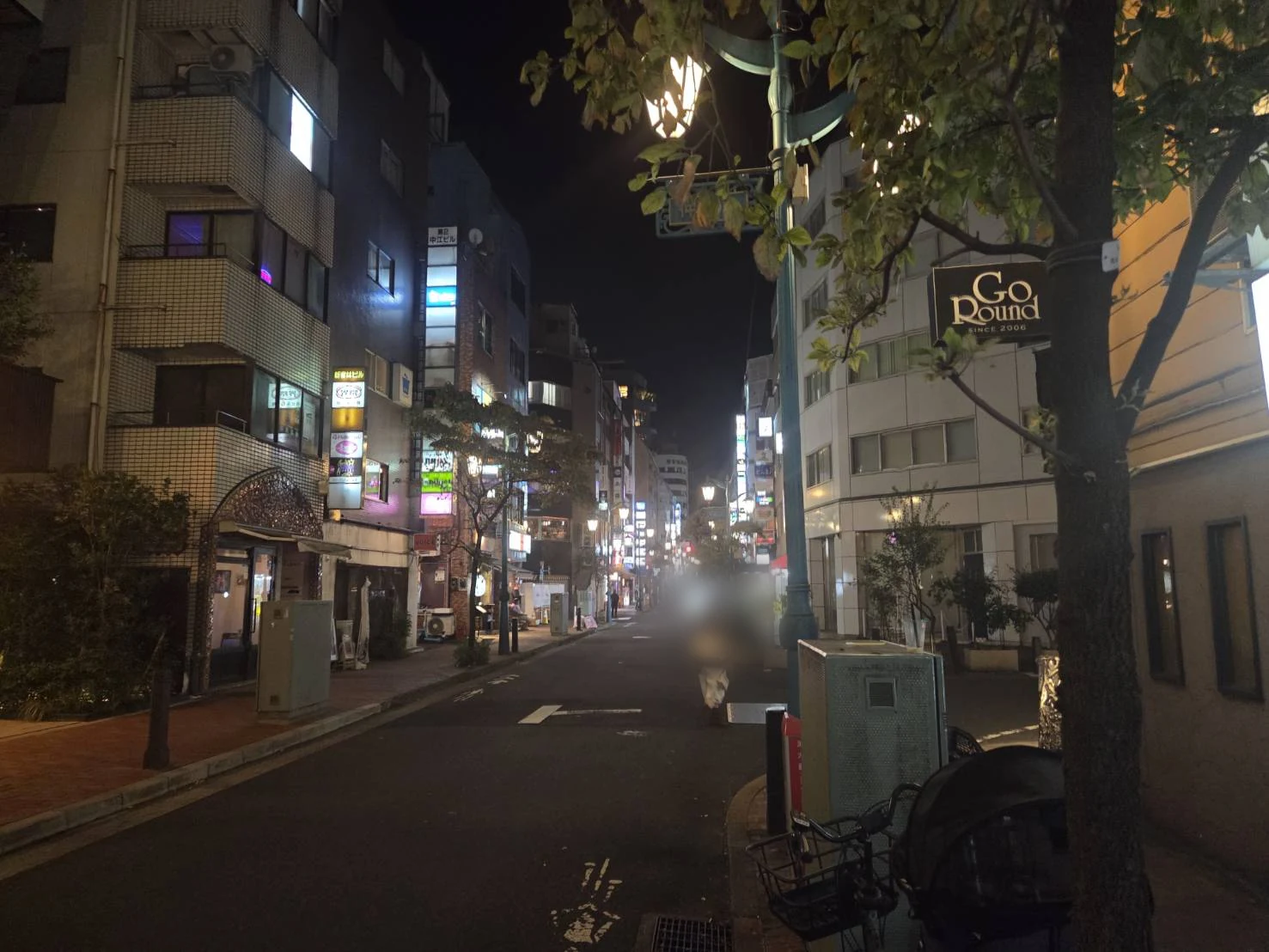
Touting in Kabukicho is not tolerated as local color. It is the target of long-running enforcement.
The Metropolitan Police Department publishes the number of people arrested across Tokyo for touting and street scouting under the Fueiho and the nuisance prevention ordinance. The figure fell from 712 people in 2015 to 333 in 2024, with 570 in 2018, 399 in 2020 and 390 in 2023 along the way (Metropolitan Police Department). The police do not break the figures down by district on that page, so we cannot say how many were in Kabukicho.
Kabukicho is covered by the police department’s street camera system: 55 cameras (46 dome and 9 fixed), in operation since February 27, 2002 (Metropolitan Police Department). Shinjuku City has hired retired police officers as touting prevention officers and set up a contracted safety patrol for its nightlife streets (Shinjuku City, March 2018).
The ward also calls on local groups in the priority districts to work against touting, and its ordinance provides for lease terms that let landlords end a tenancy over violations. The pressure is on the businesses as well as on the people standing in the street.
Frequently asked questions
Is it illegal to be a tout in Kabukicho?
Yes. Touting is restricted by Tokyo’s nuisance prevention ordinance, by the national Fueiho and by Shinjuku City’s anti-touting ordinance. Penalties range from public naming and an administrative fine of up to ¥50,000 under the ward ordinance (Article 19) to up to six months’ imprisonment, a fine of up to ¥1,000,000, or both under the Fueiho.
What is the best Japanese phrase to refuse a tout?
Kekkō desu (結構です), meaning “I’m fine, no thanks.” If that is ignored, irimasen (いりません, “I don’t need it”) is firmer. Avoid daijōbu desu, which can be heard as agreement.
Is it rude to ignore touts in Japan?
No. Street touting is prohibited in Kabukicho, and the police advise visitors not to follow touts. A short “No thank you” while you keep walking is enough; you do not owe a longer answer.
What should I do if a tout grabs my arm or follows me?
Say yamete kudasai (“please stop”), move toward a bright main road or a police box, and call 110 if it continues. Grabbing, blocking your way and following you are themselves prohibited under Article 7(1)(iv) of Tokyo’s nuisance prevention ordinance.
Can I call the police in English in Tokyo?
Yes. Dial 110. According to the Metropolitan Police Department, a police interpreter joins the call if you do not speak Japanese. The Shinjuku Police Station can also be reached on 03-3346-0110.
Is every person calling out in front of a shop an illegal tout?
No. Staff greeting passers-by from a shop entrance is common. Shinjuku City defines prohibited touting as singling out a specific person from passers-by and inviting them to a venue. As a rule of thumb, refuse anyone who leaves the shopfront to walk with you.