Shibuya Halloween 2026: What Is Actually Banned, and What Isn’t
If you have seen the videos — thousands of people in costume flooding the Shibuya Scramble Crossing on October 31 — you should know that the event in those videos no longer exists. Shibuya City, the local government that runs the neighborhood, does not organize a Halloween event, has publicly asked visitors not to come to the Shibuya Station area for Halloween, and since October 2024 has banned drinking alcohol in public places around the station every night of the year, not just on Halloween.
What follows is what is actually prohibited, what is not, which ordinance each rule comes from, what happens if you break it, and what Shibuya City has and has not announced for 2026. Costumes are not illegal. Street drinking is. The ¥2,000 fine you may have read about is real — but it is for littering, under a different ordinance, and most English guides blur the two together.
The short answer: what’s banned in Shibuya on Halloween
Three separate local ordinances are in play, and they carry very different consequences. Mixing them up is the single most common error in English-language coverage.
| What you might do | Status | Consequence |
|---|---|---|
| Wearing a costume in Shibuya | Not prohibited | None. There is no costume rule. |
| Standing on the Scramble Crossing to take photos | Not prohibited | None, but police may keep crowds moving. |
| Drinking alcohol on the street, 6 p.m.–5 a.m., in the designated zone | Prohibited by ordinance | No fine attaches to this provision. Ward staff and patrols will tell you to stop. |
| Dropping litter anywhere in Shibuya Ward | Prohibited | ¥2,000, issued on the spot, since June 1, 2026 |
| Touting for a bar or club on the street | Prohibited | Up to ¥50,000 — but this applies to the tout, not to you |
| Climbing street lights or buildings, using open flame, amplified noise | Prohibited as nuisance behavior | Ward guidance; police may act separately |
So: you will not be arrested for a costume. You can be told to pour away a drink. You can be charged ¥2,000 on the spot for dropping a can. And the people who will try hardest to get your attention on Halloween night — street touts — are the ones the ward is actually prosecuting.
Shibuya does not run a Halloween event — and asks you not to come
There has never been an official Shibuya Halloween. The gatherings that made the neighborhood famous were spontaneous: people arrived in costume, the crossing filled up, and the images traveled. The ward’s position on this has hardened year by year.
In an October 2023 message addressed to visitors, Shibuya’s mayor asked people not to come to the Shibuya Station area during the Halloween period. The English version of that message used the phrase “DO NOT come to the Shibuya Station area” — unusually direct language for a Japanese local government, and a good signal of how the ward sees the problem.
The shift was gradual. Costumed crowds began gathering in Shibuya around 2010; police introduced crowd-control announcers — the so-called “DJ police” — in 2014; and from 2015 the ward supported the gathering with temporary toilets and fitting rooms. A 2024 review of the ward’s Halloween policy by researcher Kentarō Gotō traces the turn to 2018, when a light truck was overturned by the crowd. The ordinance followed in June 2019, and the amendment making the drinking ban year-round passed the ward assembly unanimously on June 17, 2024. By 10 p.m. on October 31, 2023, the same review records a peak of about 15,000 visitors — roughly 60 percent of the previous year.
The reasoning the ward gives in its own materials is crowd safety and the effect on residents: street drinking had become routine, and with it came abandoned rubbish, noise, and the risk of a crush in a small, sloped area with limited exits. The ward states in its explanation of the ordinance that Halloween and the New Year countdown were the periods when “the safe and comfortable order of the Shibuya Station area was threatened” by nuisance behavior from some visitors.
One point worth stating carefully, because it circulates widely in English: the 2022 Itaewon crowd crush in Seoul is frequently named as the trigger for Tokyo’s tightening. The ward has said so itself, in its own words and in English. In a message published on Halloween night 2022, the mayor wrote: “We would like to express our deepest sympathies at the news of the accident in Itaewon, Seoul. Shibuya City Office has been in cooperation with the police, and the crowdedness around Shibuya station on the weekend makes us worry that a similar accident might happen in Shibuya, too.” Read it as what it is — the mayor explaining the urgency, published by the ward — rather than as the legal rationale for the ordinance, which the ward states separately in the terms quoted above.
The street-drinking ban: the actual ordinance
The rule has a name, a number, and a text, and almost no English guide quotes any of them. It is the Ordinance on Securing a Safe and Secure Environment in the Area Around Shibuya Station (渋谷駅周辺地域の安全で安心な環境の確保に関する条例), Shibuya Ward Ordinance No. 21 of June 20, 2019.
The operative provision is Article 6, paragraph 1. In the ward’s current statute book it reads:
No person shall consume alcohol in a public place (meaning a road, park, plaza, or other place of a public character) within the area prescribed by ward regulation, within the Shibuya Station area, during the hours prescribed by ward regulation.
— Article 6(1), Ordinance No. 21 of 2019 (editorial translation of the Japanese text)
Notice what Article 6 does not say. It does not name the hours or draw the map. It delegates both to the enforcement regulation, which is why the rule can be tightened without reopening the ordinance. Article 3(2) of the enforcement regulation (Regulation No. 32 of 2019) sets the hours: from 6 p.m. until 5 a.m. the following morning.
What changed in October 2024
Until 2024 the restriction was seasonal — it applied around Halloween and the New Year countdown. The ward amended it so that, from October 1, 2024, the 6 p.m.–5 a.m. ban runs year-round, and the restricted area was enlarged. The ward’s explanation of the amendment is explicit about why: nuisance street drinking had become a permanent condition rather than a seasonal one, and the rubbish and noise that came with it were getting worse.
Shibuya publishes a leaflet about the ban in English, Korean and Chinese as well as Japanese. The English version states the rule plainly: drinking alcohol is banned from 6 p.m. to 5 a.m. daily, in public spaces such as streets and parks around Shibuya Station, effective October 1, 2024. If you see a sign in Shibuya with a crossed-out beer can, this is the rule it refers to.
The ban can be lifted — a detail nobody mentions
Article 6(2) lets the mayor lift the drinking restriction for specified dates, hours and areas, and Article 4 of the enforcement regulation requires that any such lifting be published as an official notice. The ward’s guidance says this is used for events it sponsors or co-sponsors and for neighborhood association and shopping-street events, and that organizers should apply at least one month in advance.
The practical meaning for a visitor: the zone is not a permanent dry area in the American sense. It is a default prohibition with a documented exemption route. It is not a route an individual can use — you cannot apply to drink a beer on the pavement — but it explains why you may occasionally see a sanctioned street event with alcohol inside the same blocks.
Where the ban applies (and where it stops)
Article 2(1) of the ordinance defines the “Shibuya Station area” as ten named blocks:
Shibuya 1-chōme, Shibuya 2-chōme, Shibuya 3-chōme, Sakuragaoka-chō, Dōgenzaka 1-chōme, Dōgenzaka 2-chōme, Maruyama-chō, Udagawa-chō, Jinnan 1-chōme and Jingūmae 6-chōme.
— Article 2(1), Ordinance No. 21 of 2019
Maruyama-chō is the block that the 2024 amendment added — the sloped nightlife quarter behind Dōgenzaka. Within these ten blocks, the enforcement regulation’s appended table narrows the drinking-restriction zone further, down to specific block numbers; for Udagawa-chō, for example, it lists blocks 1 to 6, 10 to 36, and 39. The ward publishes a map of the zone, and that map, rather than a list of chōme names, is what to check if you are close to the edge.
Two things follow. First, this covers essentially everything a visitor thinks of as “Shibuya”: the Scramble Crossing, Center Gai, Dōgenzaka, Udagawa-chō, the Hachikō plaza, and the approach to Harajuku at Jingūmae 6-chōme. Second, the ward has separately declared a ward-wide “Zero Nuisance Street Drinking” policy reaching beyond the ordinance zone. Outside the zone there is no prohibition to break, but patrols still ask people to stop — the ward has run nightly patrols around the station since September 2023.
Is there a fine? The part most guides get wrong
This is where English coverage goes off the rails. Much of it puts “rules” and “fines” together in a way that implies street drinking in Shibuya carries a monetary penalty. It does not.
We checked this directly against Shibuya’s statute book, which is searchable and was current as of August 1, 2026. Searching the full corpus of ward ordinances and regulations for karyō (過料, administrative fine) returns 25 instruments; searching for bassoku (罰則, penal provisions) returns 14. Ordinance No. 21 of 2019 appears in neither list. The ordinance creates a duty — “no person shall consume alcohol” — and attaches no fine, no arrest power and no criminal penalty to breaching it. A survey of Halloween-related ordinances by the Research Institute for Local Government reaches the same conclusion for both Shibuya and Shinjuku: no penalty, guidance only.
What happens instead, on the ward’s own account of its patrols, is that staff approach you and instruct you to stop drinking. Shinjuku, which runs a comparable scheme, describes the same procedure. Police retain separate powers over drunkenness, obstruction and disorder, and nothing in this ordinance affects them.
No fine is not the same as optional. This is a legal prohibition, enforced by instruction, in a neighborhood managing several thousand people through a small space. But it is worth knowing which of the evening’s risks cost money — and that one is the next section.
The ¥2,000 litter fine is real — and it’s a different ordinance
Since June 1, 2026, dropping litter in Shibuya Ward carries an administrative fine of ¥2,000, issued on the spot. This is new, it is the first Halloween it will be in force for, and it comes from a completely separate instrument: the Clean Town Shibuya Ordinance (きれいなまち渋谷をみんなでつくる条例), Ordinance No. 41 of December 2, 1997, as amended in December 2025.
The details matter, because this one can actually cost you money:
- Amount: ¥2,000.
- Area: the entire ward, including private land — not just the station zone.
- What counts: discarding rubbish in a public place anywhere other than an ashtray, a collection container, or a designated spot. The ward names cigarette butts, cans, bottles, PET bottles, chewing gum and wrappers.
- Who collects it: patrol officers circulating the ward, who charge it on the spot when they witness the act.
- How you pay: cash, electronic payment, or an invoice to pay later.
The ward announced the change on December 18, 2025, with a staged rollout: a requirement for shops to install collection containers from April 1, 2026, and the fine itself from June 1, 2026.
It is not a paper rule. The ward says up to 60 patrol officers cover the whole ward around the clock, and it publishes a monthly count of fines issued: 325 in June 2026, 183 in July, 455 in August and 584 in September — 1,547 in the rule’s first four months, before its first Halloween.
Put the two ordinances side by side and the picture is clear.
| Street drinking | Littering | Touting | |
|---|---|---|---|
| Ordinance | Safe & Secure Environment Around Shibuya Station, No. 21 of 2019 | Clean Town Shibuya, No. 41 of 1997 | Prevention of Touting in Public Places, No. 49 of 2024 |
| Area | Ten blocks around the station, narrowed by regulation | Whole ward, incl. private land | Public places in the ward |
| Hours | 6 p.m. – 5 a.m., year-round | Any time | Any time |
| Fine | None | ¥2,000, on the spot | Up to ¥50,000 |
| Who it targets | Anyone | Anyone | The tout and their employer |
| In force since | Year-round from Oct 1, 2024 | Fine from Jun 1, 2026 | Fine from Apr 1, 2025 (ordinance of Dec 2024, replacing a 2014 one) |
The same ordinance also fines you ¥2,000 for smoking outdoors. Article 11(2) of the Clean Town Shibuya Ordinance says that no one may smoke in a public place outdoors — roads, parks, plazas and other public space — except inside a designated smoking area, and it applies across the whole of Shibuya Ward, not only near the station. Article 23(4) of the ordinance caps the penalty at ¥10,000; Article 19(4) of the enforcement regulation sets the actual amount at ¥2,000, issued on the spot, the same as the litter fine. Heated tobacco — IQOS, glo, Ploom — counts as smoking, and so does lighting up on a bicycle or motorbike, moving or stopped.
This is the most heavily enforced rule in this article by a wide margin. The ward has been charging it since 2019 and publishes the count: 27,516 street-smoking fines in the year to March 2026, and the worst single month of that year was October, at 2,927. If you smoke, check the ward’s map of public smoking areas before you light up, because on Halloween night the street is not an option.
Costumes are not banned. Here’s what is.
No Shibuya ordinance regulates fancy dress. You can wear a costume on October 31, photograph yourself on the crossing, and walk through Center Gai in full make-up without breaking any local rule.
What the ward and neighboring Shinjuku list as prohibited nuisance behavior is narrower and more specific: using open flame, climbing street lights, structures or buildings, and generating noise with amplified equipment. Those are the behaviors that turned crowd photographs into incident reports in earlier years.
One practical note unrelated to local ordinances: on a night with a heavy police presence and active crowd control, a realistic prop weapon is the wrong thing to be carrying in your hand. If your costume involves a sword, an axe or a replica firearm, choose a soft or obviously toy version and keep it in a bag between venues. Note too that the ward provides no changing facilities — in earlier years it set up temporary toilets and fitting rooms, but that support was part of an accommodating approach it has since abandoned.
Two national laws sit behind that advice. Under Article 22 of the Firearms and Swords Control Act, no one may carry a blade more than 6 cm long in public without a work-related or other justifiable reason, with narrow exceptions set by ordinance for scissors and folding knives with a blade of 8 cm or less and for certain other blade types; the penalty is up to two years’ imprisonment or a fine of up to ¥300,000. Article 22-2 of the same Act separately prohibits possessing an imitation handgun — an object made of metal and closely resembling a real handgun — punishable by a fine of up to ¥200,000. Separately, Article 1(2) of the Minor Offenses Act makes it an offense to carry a blade or similar implement concealed without justifiable reason, punishable by detention or a petty fine. None of this is aimed at an obviously soft costume prop, but it is why a metal replica is the wrong thing to have on you in a crowd being worked by police.
What Halloween night actually looked like in 2025
The most useful guide to 2026 is what the ward did last year, as long as it is labeled as last year. Here is the documented 2025 picture.
The Hachikō statue was fenced off. Shibuya City announced on October 21, 2025 that temporary hoarding would be installed around the statue from 6 a.m. on Thursday, October 30 until 5 a.m. on Saturday, November 1. The ward advised anyone wanting to see the statue to visit on or before October 29, or from the morning of November 1. A press area was set up at the Hachikō plaza and in front of Shibuya Station exit A6a from 5 p.m. on October 31 to 1 a.m. on November 1.
Alcohol sales near the zone were suspended by request. The ward asked 58 retailers — convenience stores, department stores and other alcohol sellers near the no-drinking zone — to voluntarily stop selling alcohol on October 31. This is not a discretionary favor: Article 4 of the ordinance places a duty on businesses to cooperate with ward measures including the voluntary suspension of alcohol sales. Expect the beer fridge to be taped shut.
Roads around the station were closed to traffic. Police ran traffic restrictions from the evening of October 31 into the early hours of November 1, with the stretch from the bottom of Miyamasuzaka to the Scramble Crossing closed to vehicles from roughly 4 p.m. until the security operation ended.
Station access changed with the crowds. The ward’s guidance was that entrances, exits and pedestrian routes at the station could be altered depending on congestion, and directed visitors to check announcements from the police and the railway operators. If you are traveling on the night, assume your usual exit may be closed and give yourself extra time.
How far that went in 2023. There is a documented precedent for what “your exit may be closed” can mean. A study of the ward’s Halloween measures published by the Japan Travel Bureau Foundation records that in 2023 the ward, the Shibuya police and the railway operators made the Hachikō ticket gate entry-only — you could go in through it, but not out — so that arriving passengers were routed out via the Miyamasuzaka exit rather than straight into the plaza, and that at the entrance to Center Gai a barrier was installed down the middle to make the street one-way. That was 2023, not a standing annual arrangement, and nothing of the kind has been announced for 2026 — but it shows the sort of measure that gets used when the crowd builds.
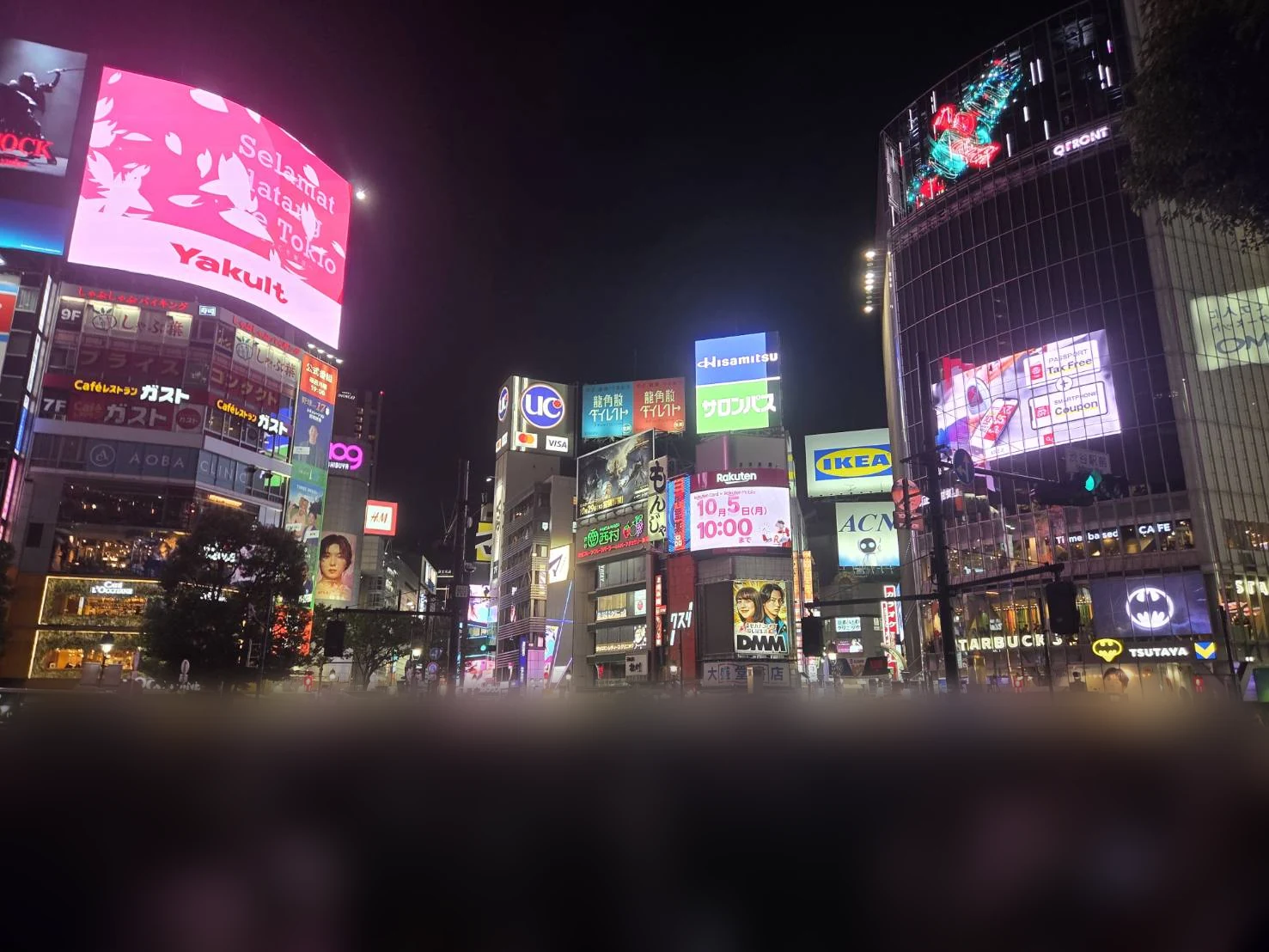
If something goes wrong in the middle of that — you lose a companion, your wallet, or your passport — the emergency numbers are 110 for police and 119 for fire and ambulance.
What Shibuya has announced for 2026 — and what it hasn’t
As of October 9, 2026, Shibuya City has not yet published its Halloween 2026 measures. We checked the ward’s press release index for 2026: the most recent entry is dated September 1 and concerns an unrelated startup program. There is no 2026 Halloween page, no mayor’s message for this year, and no announcement about the Hachikō statue.
That is not a sign the ward has relaxed. It is a sign of timing. The ward’s Halloween announcements have historically landed in the first three weeks of October — the 2025 measures package was announced on October 2, the Hachikō hoarding on October 21, and the 2023 mayor’s message on October 11. As of October 9 the ward had still announced nothing, so check the ward’s site again in the week before you travel.
Here is what can be stated with confidence for 2026, because it does not depend on an annual announcement:
- The street-drinking ban is already in force and does not need renewing. It runs 6 p.m.–5 a.m. every night, including October 31, under the year-round rule that took effect in October 2024.
- The ¥2,000 litter fine is already in force ward-wide, since June 1, 2026.
- The touting ordinance is already in force, and its ¥50,000 fine has applied since April 1, 2025.
- October 31, 2026 falls on a Saturday, which historically produces the largest crowds — the 2024 tightening followed a run of weekend Halloweens.
What is genuinely unknown until the ward speaks: whether the Hachikō statue will be fenced and on which dates, how many retailers will be asked to stop selling alcohol, the exact traffic closures, and whether the mayor repeats the “please don’t come” message. We are not going to guess at those. Anything you read that states 2026 Hachikō closure dates as fact, at the time of writing, is extrapolating from 2025.
Shinjuku, and the rest of Tokyo
Shibuya’s crackdown pushed crowds outward, and neighboring Shinjuku responded with an ordinance of its own: the Ordinance on Securing a Safe and Orderly Environment in the Area Around Shinjuku Station (新宿駅周辺地域の安全で秩序ある環境の確保に関する条例), promulgated and in force from June 21, 2024. Like Shibuya’s, it carries no penalty — ward staff give instructions to stop.
Unlike Shibuya, Shinjuku has already published its 2026 Halloween measures, last updated August 24, 2026. They are worth reading because they are more specific than most travel coverage:
- Street drinking restricted from 5 p.m. on Saturday, October 31 to 5 a.m. on Sunday, November 1.
- Restricted area: parts of Shinjuku 3-chōme and Kabukichō 1-chōme.
- Alcohol sales: the ward will ask shops selling alcohol in and around the restricted area to suspend sales.
- Nuisance behavior prohibited: open flame, climbing street lights and structures, amplified noise.
- Enforcement: ward staff patrols giving instructions to stop drinking, plus contracted security guards for crowd-safety management.
Shinjuku’s message to visitors is blunter than the legal text: the ward states that Kabukichō is not a large place, that crowds of street drinkers cause accidents and fights, that abandoned rubbish badly affects residents, and that if you want to drink, drink in a venue under that venue’s rules.
| Shibuya | Shinjuku | |
|---|---|---|
| When street drinking is restricted | Every night, year-round, 6 p.m.–5 a.m. | Halloween night only, 5 p.m. Oct 31 – 5 a.m. Nov 1 (2026) |
| Area | Ten blocks around Shibuya Station | Parts of Shinjuku 3-chōme and Kabukichō 1-chōme |
| Alcohol sales suspension requested | Yes (58 retailers in 2025) | Yes |
| 2026 measures published? | Not yet, as of Sep 24, 2026 | Yes, updated Aug 24, 2026 |
| Asks visitors not to come? | Yes, in past years | No — asks you to drink indoors instead |
Elsewhere in Tokyo the position is looser. Other wards have not adopted Halloween-specific street-drinking ordinances: the Research Institute for Local Government’s survey of Halloween-related ordinances finds only three in the whole country, two of them Shibuya’s and Shinjuku’s. And Japanese law contains no general prohibition on drinking in public — which is precisely why these local ordinances exist. If you want the background on how Kabukichō became the district that needs this kind of management in the first place, we cover that in how Kabukichō became Kabukichō.
A warning that matters more on Halloween: don’t follow touts
On a night when the street is packed, the bars are full and a lot of people in costume are looking for somewhere to go, street touts have their best working conditions of the year. This is the part of Halloween in Shibuya that is most likely to cost you real money.
As a general rule, do not go with a tout. If someone approaches you on the street offering a bar, a club, a “cheap all-you-can-drink”, a girls’ bar or anything else, decline and keep walking. It applies in Shibuya, in Kabukichō, in Roppongi, everywhere — and it applies whether the person is friendly, speaks good English, or shows you a laminated price card. The price on the card is not the price you will be asked to pay.
Shibuya does not merely disapprove of this. The Shibuya Ordinance on the Prevention of Touting in Public Places (Ordinance No. 49 of December 11, 2024) prohibits both touting and waiting for customers in public places, and bans making anyone else do it. Article 14 provides an administrative fine of up to ¥50,000, and the enforcement regulation fixes the amount at ¥50,000; both have applied since April 1, 2025. Article 15 adds a dual liability provision: where an employee commits the offense in the course of the employer’s business, the fine is imposed on the company as well as the individual.
The ward publishes its enforcement record, and it is not symbolic. As of the ward’s published tally, there have been 84 administrative dispositions at the ¥50,000 level, and 50 venues inspected — cabaret clubs, lounges, girls’ bars, hostess-style restaurants and late-night alcohol-serving venues. Dispositions are published for one year, and the listed grounds include not only touting itself but giving false statements about name, address, date of birth, phone number or the venue involved.
That list of venue types tells you where touts take people, and those are the businesses most associated with surprise bills in Tokyo. The fine falls on the tout; the bill falls on you.
Three things that help:
- Decline without engaging. A short “no, thank you” and continued walking works better than a conversation.
- Know the warning signs before you are inside a venue: no price list at the door, a quoted price that turns out to cover only the first drink, a table or service charge nobody will put a figure on, and any insistence that you settle up inside rather than at the door.
If it does go wrong and you are presented with a bill that bears no relation to what you agreed, do not pay it to make the problem go away and do not let it be settled at the door. Say that you want to call the police, and call 110.
Where to go instead
The honest framing: if you wanted the crowd from the videos, that experience is over, and the ward has spent four years and three ordinances making sure of it. If you wanted a Halloween night out in Tokyo, that still exists — it has moved indoors and outward.
Go into a venue. The street-drinking ordinance regulates public places. Bars, clubs, restaurants and izakaya are unaffected, and Shibuya’s venues run Halloween events. This is also what Shinjuku Ward explicitly tells visitors to do: drink in a venue, under that venue’s rules.
Book ahead for October 31. Venues that would normally take walk-ins will be full or on a ticketed door. A reservation removes the exact situation the touts are fishing in — standing on the street at 10 p.m. with nowhere to go.
Use a free information center rather than a street tout. These are staffed offices, not people grabbing your sleeve on the pavement, and they are a reasonable way to find a venue if you have not booked. Confirm the total price before you go in. We explain how they work, and how they differ from touting, in our guide to Japan’s free information centers.
Carry your passport. Many venues will check ID at the door, and on Halloween the checks are stricter, not looser. Bring the physical passport rather than a photograph of it.
Understand closing times. Which venues may legally stay open, and until when, is set by national law rather than ward ordinance, and it shapes where the night can go after midnight — see what the Fūeihō is.
See the crossing on another day. The crossing and the statue are there all year and photograph better without a crowd-control operation; in 2025 the statue was inaccessible for two full days. An ordinary weekday evening gives you the shot you came for.
FAQ
Is Shibuya Halloween canceled in 2026?
There is nothing to cancel, because there was never an official event. Shibuya City does not organize a Halloween event and has asked visitors not to come to the Shibuya Station area during the Halloween period. The neighborhood is open, the trains run, the shops and bars are trading — but the mass street gathering is actively discouraged and the street-drinking ban applies. As of October 6, 2026 the ward had not yet published its measures for this year.
Can I wear a costume in Shibuya on Halloween?
Yes. No Shibuya ordinance restricts costumes. What is prohibited as nuisance behavior is using open flame, climbing street lights or buildings, and generating noise with amplified equipment. Separately, be careful with realistic prop weapons: Japanese law restricts carrying blades in public, and a convincing replica in a crowd-controlled area can attract police attention.
Can you drink alcohol on the street in Shibuya?
Not in the designated zone around Shibuya Station between 6 p.m. and 5 a.m., on any night of the year. That rule comes from Article 6 of Shibuya Ordinance No. 21 of 2019, with the hours set by Article 3(2) of its enforcement regulation, and it has applied year-round since October 1, 2024. Drinking inside a licensed venue is unaffected.
Will I be fined for drinking on the street in Shibuya?
No. The street-drinking provision carries no fine and no criminal penalty — Ordinance No. 21 of 2019 does not appear in Shibuya’s list of ordinances containing administrative fines or penal provisions. Ward patrol staff will instruct you to stop. The fine people confuse this with is the ¥2,000 littering charge, which is a different ordinance, applies across the whole ward, and has been issued on the spot since June 1, 2026.
Is the Hachikō statue closed at Halloween?
It was in 2025: Shibuya City installed temporary hoarding around the statue from 6 a.m. on October 30 until 5 a.m. on November 1, and advised visitors to come on or before October 29 or from the morning of November 1. The ward had not announced its 2026 arrangements as of October 6, 2026. If seeing the statue matters to you, plan around the last days of October rather than assuming access.
What happens if a tout approaches me on Halloween night?
Decline and keep walking. Touting in public places is prohibited in Shibuya under Ordinance No. 49 of 2024, with an administrative fine of ¥50,000 and a dual liability provision reaching the employing business; the ward has published 84 dispositions and 50 venue inspections. The penalty applies to the tout, not to you — but the inflated bill at the end of the night would be yours, so the rule is simply not to go.
Where do people go for Halloween in Tokyo instead?
Into venues, and into other neighborhoods. Bars, clubs and restaurants across Tokyo run Halloween events and are unaffected by the street-drinking ordinances, which regulate public places only. Shinjuku restricts street drinking on October 31 and November 1, plus any further period the ward mayor designates, in parts of Shinjuku 3-chōme and Kabukichō 1-chōme, and tells visitors plainly to drink in a venue under that venue’s rules. Booking ahead for October 31 is the single most useful thing you can do.
Before you go
Local ordinances change, and all three of the ordinances described here have changed since October 2024. The rules described here were verified against Shibuya City’s statute book, current as of August 1, 2026, and against the ward’s own published guidance on . Shibuya’s 2026 Halloween announcement had not been published at that point; check the ward’s website in early October before you travel. For anything with legal consequences, the ward’s Safety Measures Section and your own embassy are the authorities, not a travel guide.