What Is Fueiho? Japan’s Entertainment Business Law, Explained
“Fueiho” (風営法, fūeihō) is the everyday Japanese name for the Act on Control and Improvement of Amusement Business, Act No. 122 of 1948. It is the national law that decides which nightlife and gaming businesses need a police-issued permit, which only have to file a notice, what hours they may keep, who may work in them, and who may walk in. Hostess and host clubs, pachinko and mahjong parlors, game centers, nightclubs, late-night bars and the sex industry all sit inside it.
Three points matter most for a visitor. Most of its rules bind the business, not the customer. Its age lines are 18 for entry and work, and 20 for alcohol and tobacco. And a Fueiho notification is not a license to break other laws. We read the current articles on e-Gov, the Japanese government’s official law database, and link each one below. The official English translation is older than the 2025 changes, so we say where it differs.
What the name means, and what the law is for
The full Japanese title is 風俗営業等の規制及び業務の適正化等に関する法律. “Fueiho” shortens fūzoku eigyō (風俗営業) plus hō (法, “law”). The Ministry of Justice’s official translation site titles it the Act on Control and Improvement of Amusement Business and renders fūzoku eigyō as “amusement business” (Japanese Law Translation). English writers also call it the Entertainment Business Law or the Businesses Affecting Public Morals Regulation Act. They are all the same statute.
Japan’s National Diet Library index lists the law as promulgated on July 10, 1948, under the title 風俗営業取締法 (Amusement Business Control Act). It was renamed in 1959 and given its present title by Act No. 76 of 1984 (NDL Japanese Law Index).
Article 1 states the purpose. In the official translation, the Act regulates “business hours and business areas” and “the entrance of youths” to these places, “for the purpose of maintaining public morals and wholesome social environment and preventing acts that hamper the sound development of youths.” In plain terms, it is a zoning, hours and youth-protection law for businesses the state sees as needing a closer eye. It does not decide what is a crime in general; that is the job of the Penal Code and other laws.
Enforcement is local. Permits and notices go to the prefectural Public Safety Commission, and applications are handled through the prefectural police (Article 3). Prefectures also write their own Fueiho ordinances on hours and zones, so Tokyo and Osaka rules can differ.
The five kinds of “amusement business” that need a police permit
Article 2(1) defines “amusement business” (風俗営業) as five numbered types. Anyone who wants to run one must get a permit, for each premises, from the local Public Safety Commission (Article 3(1)) (e-Gov, Act No. 122 of 1948). Running one without a permit is punishable under Article 49 by up to five years’ imprisonment or a fine of up to ¥10 million, or both.
| Type (Article 2(1)) | What the law describes | Everyday examples | Permits at end of 2025 |
|---|---|---|---|
| No. 1 | Cabarets, restaurants, cafés and similar places that “entertain” customers while serving food and drink | Hostess clubs, host clubs, some snack bars | 59,675 |
| No. 2 | Coffee shops or bars kept at 10 lux of light or less | Very dark bars | 19 |
| No. 3 | Coffee shops or bars with screened booths of 5 m² or less | Private-booth bars | 1 |
| No. 4 | Mahjong parlors, pachinko parlors and other gaming “likely to stimulate customers’ desire for gains by chance” | Pachinko, pachislot, mahjong | 12,911 |
| No. 5 | Shops with slot machines, video game machines and similar devices of the kind set by rule | Game centers (arcades) | 4,184 |
| Total amusement business permits | 76,790 | ||
The counts come from the National Police Agency’s annual report on the state of these businesses (NPA, 2025 figures, published April 2026). Almost four in five permits are Type 1. Types 2 and 3, the dark bars and screened booths, have nearly vanished: 19 and 1 across the whole country.
What “entertaining customers” means
Type 1 turns on one word: settai (接待), translated as “entertaining customers.” Article 2(3) defines it as treating customers “in a manner that creates an amusing atmosphere.” That is vague, so the National Police Agency publishes interpretation standards for police. The version dated July 1, 2026 gives concrete lines (NPA, interpretation standards, July 2026):
- It is settai when staff stay near a specific small group of customers and keep them company in conversation or keep serving them drinks.
- It is not when staff pour a drink or mix a highball and promptly leave, or simply serve orders from behind the counter, even with a greeting and a little small talk.
- Encouraging a specific customer to sing, clapping along or singing together is settai. Setting up karaoke for anyone who asks is not.
- Playing games with specific customers is settai. Letting customers play among themselves is not, by itself.
This is why the same-looking bar can be two different things in law. A counter bar where the bartender chats while working is an ordinary restaurant business. A bar where staff sit with guests to keep them company is a Type 1 amusement business. It needs a permit and, under Article 13, must close at midnight unless a local ordinance allows later hours.
Sex-related businesses: notification, not permission
A separate part of the Act covers what it calls “sex-related special businesses” (性風俗関連特殊営業), which the official translation calls “sex-related business.” Article 2(5) lists five groups: store-based, non-store-based (dispatch-type), video-transmission, and two kinds of telephone introduction services. These do not get a permit. They file a notification with the Public Safety Commission before opening (Article 27 for store-based, Article 31-2 for non-store-based). Opening without filing is punishable under Article 53.
A notification is not approval. The police are not saying the business is good; they are recording that it exists so they can regulate it. The Act then limits where and when it can operate. Under Article 28, a store-based business may not operate within 200 meters of certain facilities, including schools, libraries and child welfare facilities, and prefectures may ban them from further areas by ordinance. In Tokyo, the Fueiho ordinance bars store-based businesses of this kind from operating anywhere in the prefecture between midnight and 6 a.m. (Article 11) (Tokyo Metropolitan Government, Fueiho ordinance).
The NPA counted 34,861 notified sex-related businesses at the end of 2025. Of these, 22,792 were non-store-based, 6,474 store-based, 5,449 video-transmission and 146 telephone introduction services. The store-based figure includes 4,425 love hotels and similar lodging, which the law also places in this group.
Fueiho does not make prostitution legal
This is the most common misreading in English. Fueiho regulates businesses; it does not override other laws. Article 3 of the Anti-Prostitution Act of 1956 still says: “No person shall engage in prostitution or be the other party to it” (何人も、売春をし、又はその相手方となつてはならない; our translation) (e-Gov, Anti-Prostitution Act). A business that has filed a Fueiho notification is still bound by that Act.
That Act may change, but it has not yet. A Ministry of Justice study group on prostitution rules (売買春に係る規制の在り方検討会) met nine times from March 24 to September 17, 2026, and at its last meeting circulated a revised draft of its final report (Ministry of Justice, 9th meeting). The draft records agreement that soliciting by would-be buyers, in public view or through social media, needs some rule, as Article 5 of the 1956 Act already punishes public soliciting by sellers. It urges caution about punishing prostitution itself and asks the ministry to study legislation. This is a draft report, not a bill. As of September 22, 2026, Article 5 still targets sellers only.
Nightclubs and the 2016 dance reform
For decades, Fueiho was best known abroad as the “no dancing” law. Before the 2015 amendment, businesses that let customers dance were themselves a type of amusement business. They needed a permit and, like the rest of the list, had to stop at midnight in most places. Police stepped up enforcement against clubs from around 2010, Vice reported (Vice, 2014), and a campaign by club owners and musicians collected 150,000 signatures (Time Out Tokyo, 2016).
An amendment was promulgated on June 24, 2015 (Act No. 45 of 2015). It took effect on June 23, 2016. Aichi Prefectural Police summarize it in two lines: businesses that let customers dance were removed from “amusement business,” and a new category was created for businesses that provide entertainment and alcohol after midnight (Aichi Prefectural Police).
That category is the “specified amusement-providing and food and drink-serving business” (特定遊興飲食店営業), defined in Article 2(11). It covers nightclubs and similar venues that entertain customers, serve alcohol, and stay open at some point between midnight and 6 a.m. They need their own permit (Article 31-22). Several amusement business rules also apply to them, including lighting, noise and the ban on touting (Article 31-23). In Tokyo, the ordinance lets them run through the night but bars them from operating anywhere in Tokyo between 5 a.m. and 6 a.m. (Article 13). The NPA counted 592 such permits nationwide at the end of 2025, 433 of them nightclubs.
Late-night bars: the notice most bars file
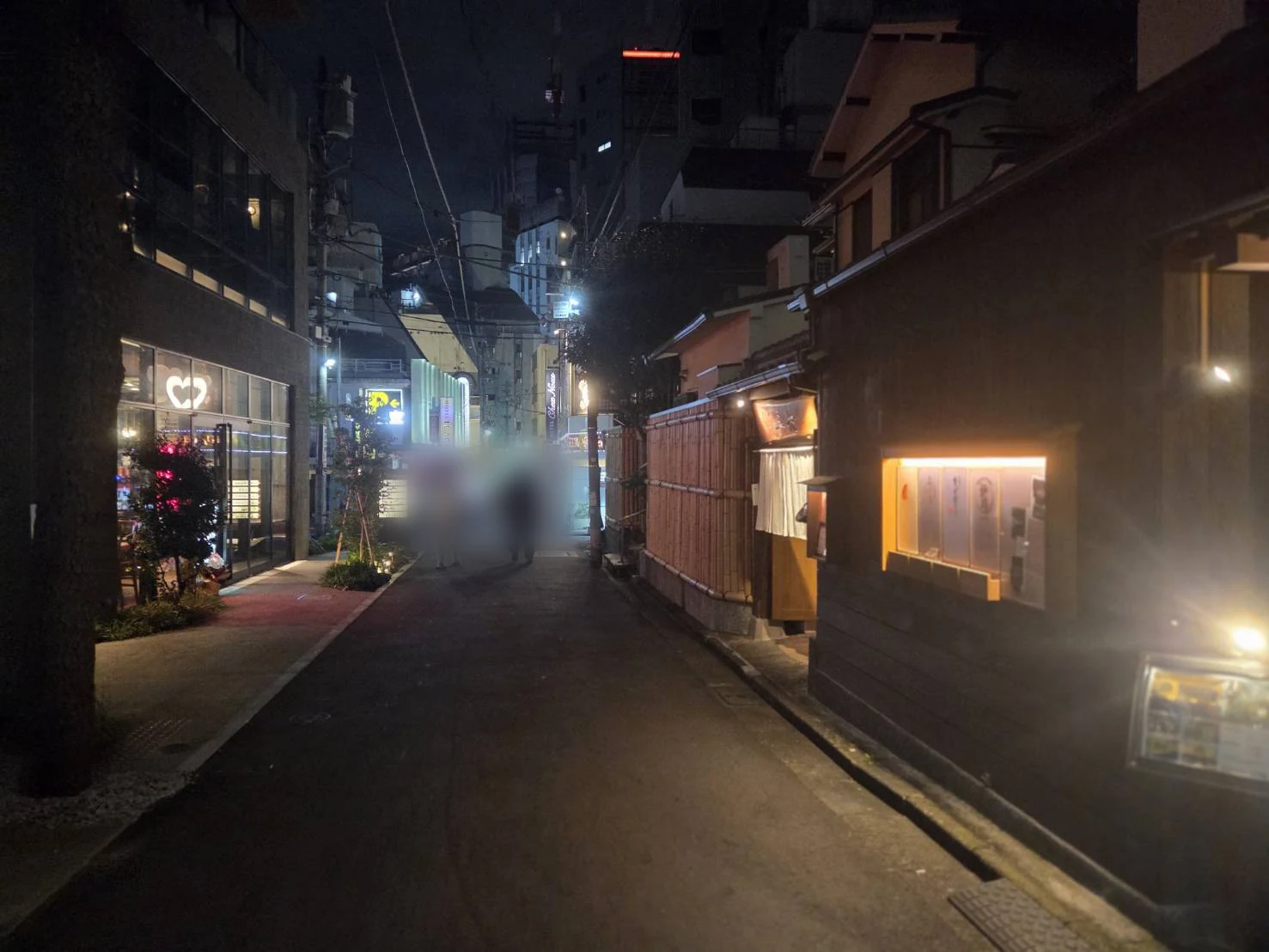
An ordinary bar or izakaya that serves alcohol after midnight is not an amusement business. In the Act’s terms it runs an alcohol-serving restaurant business late at night (深夜における酒類提供飲食店営業) and must file a notification with the police for each premises (Article 33). The NPA counted 258,163 of these at the end of 2025. That is more than three times the number of amusement business permits.
The important limit is what such a bar may not do. It may not offer settai, because that would make it a Type 1 amusement business, which needs a permit and faces midnight hours under Article 13. Article 36-2 requires Type 1 clubs, nightclubs, sex-related businesses and certain alcohol-serving bars to check staff members’ date of birth and nationality from official documents before letting them serve customers.
The midnight rule, and who can move it
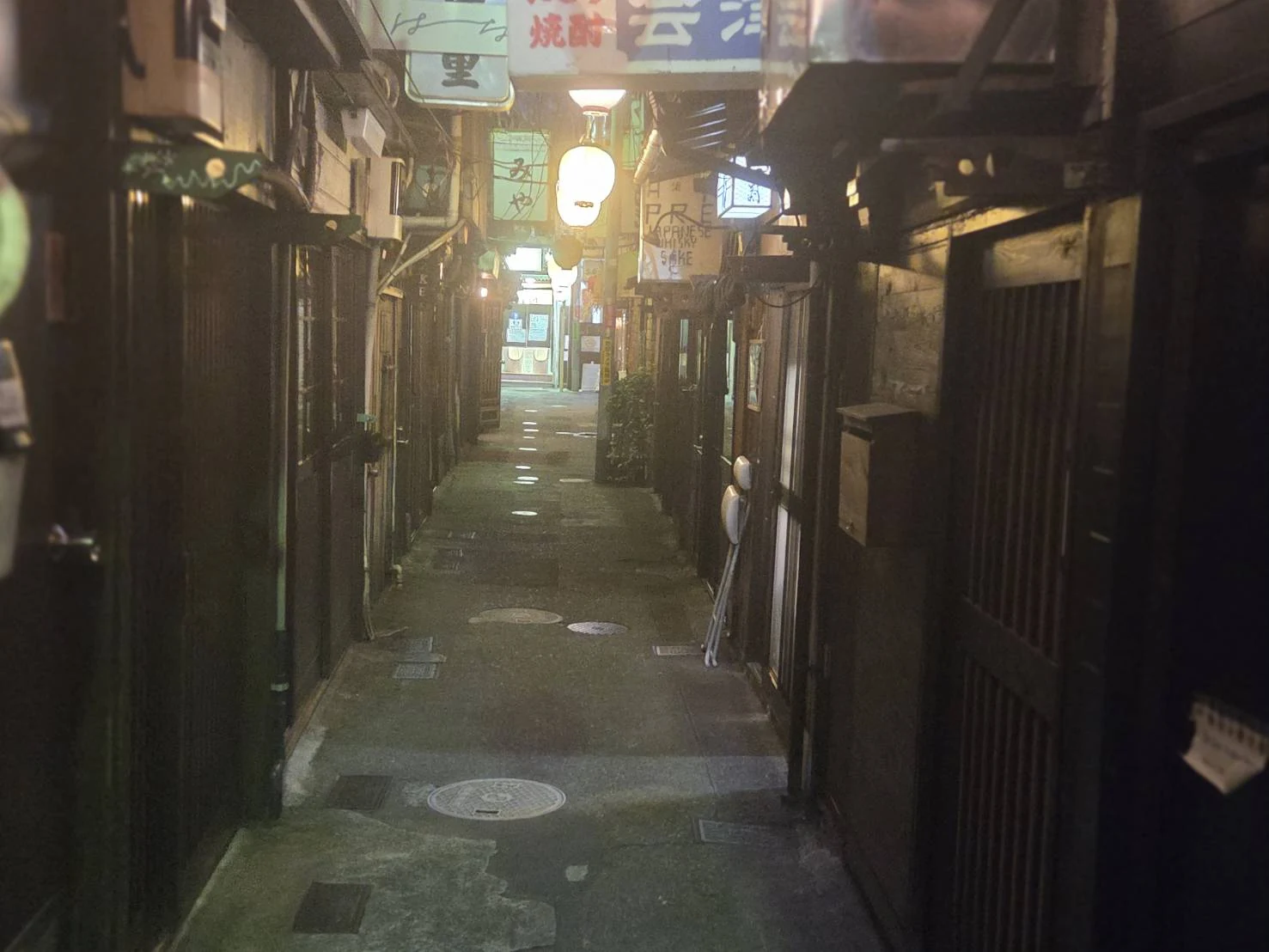
Article 13(1) is short: an amusement business operator “must not operate the business during late-night hours (between 0 a.m. and 6 a.m.).” The current Japanese text adds a proviso. If a prefectural ordinance provides for it, businesses in designated areas may stay open after midnight, up to a time the ordinance sets. This covers special days set by the ordinance, such as local festivals, and, on other days, areas the ordinance designates under standards set by Cabinet Order. Article 13(2) lets prefectures go the other way and shorten hours in certain areas.
Tokyo uses the first lever. Its ordinance (Articles 4-2 and 4-3) hands the details to a rule of the Tokyo Public Safety Commission, and that rule (Articles 4 to 6) sets them (Tokyo Metropolitan Government, implementing rule):
- Designated commercial areas: open until 1 a.m. Amusement businesses other than pachinko parlors and some other gaming halls may stay open to 1 a.m. in commercial zones that the Commission names by public notice. Blocks within 20 meters of a residential cluster zone are excluded, unless they lie within 50 meters of a main road.
- Year-end and New Year: until 1 a.m. across Tokyo. The same limit applies on days of large festivals, in areas the Commission names.
The rule also lets the Commission set a different closing time for areas it names as having special circumstances. We did not find any such notice. The Metropolitan Police Department publishes the designated areas as a Japanese list of town names in all 23 wards and 10 cities (MPD, extension areas). Kabukicho 1 and 2 chome in Shinjuku are on it. The list is undated, and a town on it qualifies only where it lies in a commercial zone. A hostess or host club still keeping guests company at 3 a.m. is past the 1 a.m. limit that the rule sets for these areas.
| Business | What it needs | Night hours in Tokyo (national law and Tokyo ordinance) |
|---|---|---|
| Amusement business Types 1-5 (hostess/host clubs, pachinko, arcades) | Permit (Art. 3) | Closed midnight-6 a.m. (Art. 13). In designated commercial areas, open to 1 a.m. (not pachinko parlors and some other gaming halls) |
| Nightclub (specified amusement-providing business) | Permit (Art. 31-22) | May run through the night; closed 5-6 a.m. across Tokyo (Tokyo ordinance, Art. 13) |
| Bar serving alcohol after midnight | Notification (Art. 33) | May open late; no settai |
| Store-based sex-related business | Notification (Art. 27) | Closed midnight-6 a.m. across Tokyo (Tokyo ordinance, Art. 11) |
Age rules: 18 to enter, 20 to drink
Japan lowered the age of adulthood from 20 to 18 on April 1, 2022 (Ministry of Justice). Fueiho keeps two separate lines, and both are written into Article 22(1) for amusement businesses.
| Rule | Where it is | Who it applies to |
|---|---|---|
| Under-18s may not enter as customers | Art. 22(1)(v) | Amusement businesses. For Type 5 arcades, the ban runs only from 10 p.m. to 6 a.m. by national law; prefectures may add daytime limits |
| Under-18s may not be made to entertain customers | Art. 22(1)(iii) | Amusement businesses |
| Under-18s may not serve customers from 10 p.m. to 6 a.m. | Art. 22(1)(iv) | Amusement businesses; also applied to nightclubs and restaurants (restaurants exempted by rule excluded) |
| No alcohol or tobacco for under-20s | Art. 22(1)(vi) | Amusement businesses; also nightclubs and restaurants |
| Under-18s may not enter, work with customers, or be customers | Art. 28(12); Art. 31-3 | Store-based and non-store-based sex-related businesses |
| “No entry under 18” sign at the entrance | Art. 18 | Amusement businesses |
Two practical results follow. First, an 18- or 19-year-old visitor may enter a hostess club or pachinko parlor but may not be served alcohol there, because the Act forbids these businesses to serve alcohol or tobacco to anyone under 20. Second, under the modified rule in Article 32(3), restaurant businesses may not admit under-18s between 10 p.m. and 6 a.m. unless a guardian is with them. The exempt types are set in Article 102 of the Act’s enforcement rules: restaurants that regularly serve food regarded as a staple meal, and alcohol-free restaurants that regularly serve more than coffee, cake and similar refreshments (e-Gov, enforcement rules). A bar that serves drinks but not meals is not exempt. A venue may ask for ID. The duty belongs to the operator, but carry your passport so you can prove your age.
What changed in 2025
The latest major amendment, Act No. 45 of 2025, was promulgated on May 28, 2025. The National Police Agency’s implementing notice says it took effect on June 28, 2025, except for new grounds for refusing an amusement business permit, which took effect on November 28, 2025 (NPA notice of June 6, 2025). The e-Gov text we read is the version in force from November 28, 2025. The NPA’s one-page summary lists the new bans and the higher penalties (NPA, summary of the 2025 amendment). The Osaka Prefectural Police describe it as a response to abusive host clubs (Osaka Prefectural Police), but the new duties apply to all Type 1 businesses. Three matter to any customer:
- No false or misleading explanation of charges (Article 18-3(i)). Article 17 already requires amusement businesses to display their charges where customers can see them.
- No serving before you order to corner you into paying for it (Article 18-3(iii)). The same article bans exploiting a customer’s mistaken belief that a staff member returns their romantic feelings, to pressure them into ordering or paying (Article 18-3(ii)).
- No intimidating customers into ordering or paying (Article 22-2(i)). Article 22-2(ii) also bans demanding that a customer raise money through prostitution, including abroad, sex-related work, or appearing in sexual videos to pay a bill.
Penalties rose. Running an amusement business without a permit now carries up to five years’ imprisonment, a ¥10 million fine, or both, up from two years and ¥2 million. Corporations face up to ¥300 million, up from ¥2 million, as the NPA and Osaka police summaries show. The amendment also banned “scout-back” payments, fees paid to scouts who recruit people into sex-related work.
Touting is an operator offense too
Article 22(1)(i) and (ii) forbid amusement businesses from touting, and from blocking or following people in public places to do it. The penalty under Article 53 is up to six months’ imprisonment, a ¥1 million fine, or both. The same rule is applied to nightclubs and late-night restaurants (Articles 31-23 and 32(3)).
Local government adds its own layer on top of the national rule: Shibuya Ward has its own touting ordinance with a fine of up to ¥50,000 for the tout, alongside a year-round street-drinking ban. Those are set out in what is actually banned in Shibuya on Halloween.
A short history, 1948 to 2025
The chart below gathers the dates covered above; each is sourced in its own section.
The NPA reports 662 Fueiho cases and 844 people cleared by police in 2025, down from 737 cases and 1,048 people in 2024. These are totals. We did not find a breakdown between operators, staff and customers.
What Fueiho means for a visitor
You are unlikely ever to break Fueiho yourself. Nearly all of its duties are addressed to “a person that runs” a business, in the words of the official translation. What it gives you is a way to read a venue.
- Prices must be displayed. A Type 1 club that will not show you its charges is not meeting Article 17. Since June 2025, misstating charges is a separate violation.
- Nobody may lawfully pull you in off the street for an amusement business. A tout is a warning sign in itself, and the U.K. government’s advice is plain: “Do not follow street touts into bars” (GOV.UK).
- Refusal is not a Fueiho rule. We found no provision in the Act about a customer’s nationality. It checks staff nationality under Article 36-2, not customers’. When a venue turns away foreign visitors, that is its own policy.
- A notice on file is not a safety guarantee. The police register sex-related businesses; they do not vouch for them. Other laws still apply, including the Anti-Prostitution Act.
If you are overcharged, threatened or kept from leaving, that is a police matter. Call 110. The Tokyo police say that if you do not speak Japanese, “a police interpreter will be on the line to assist you” (Tokyo Metropolitan Police Department).
What we could not confirm
- An updated official English translation. The Japanese Law Translation version we read reflects amendments only up to Act No. 37 of 2019, so it does not include the 2025 changes. Quotations from it are marked as the official translation; everything newer is from the Japanese text.
- The final text of the Justice Ministry study group’s report. We read the revised draft circulated on September 17, 2026. The final version and any bill may differ.
- Arrest figures for customers. The NPA totals do not separate operators, staff and customers.
Frequently asked questions
What does fueiho stand for?
Fueiho (風営法) is short for 風俗営業等の規制及び業務の適正化等に関する法律, Act No. 122 of 1948. Japan’s official translation calls it the Act on Control and Improvement of Amusement Business. It regulates hostess and host clubs, pachinko and mahjong parlors, arcades, nightclubs, late-night bars and sex-related businesses.
Is fueiho still a ban on dancing?
No. An amendment that took effect on June 23, 2016 removed businesses that let customers dance from the “amusement business” list. Nightclubs that serve alcohol after midnight now need a separate permit. In Tokyo they may operate through the night but must close from 5 a.m. to 6 a.m.
Do bars in Japan have to close at midnight?
Not all of them. The midnight-to-6 a.m. rule in Article 13 applies to permitted amusement businesses, such as hostess and host clubs, pachinko parlors and arcades. Prefectures can let some areas open later; in Tokyo, designated commercial areas may stay open to 1 a.m. An ordinary bar may serve alcohol after midnight if it files a notice with the police, but it may not have staff sit with customers to keep them company.
Can 18- and 19-year-olds go to hostess bars or clubs in Japan?
Under Fueiho, under-18s may not enter amusement businesses as customers, so 18 and 19-year-olds are not barred by that rule. But the Act forbids serving alcohol or tobacco to anyone under 20, even though adulthood in Japan has been 18 since April 1, 2022. Individual venues may set a higher age.
Does fueiho make prostitution legal in Japan?
No. Sex-related businesses file a notification under Fueiho, which is not approval. Article 3 of the Anti-Prostitution Act says no person may engage in prostitution or be the other party to it. In September 2026 a Justice Ministry study group’s draft report called for rules on soliciting by would-be buyers; that is a proposal, not law.
What changed in fueiho in 2025?
From June 28, 2025, hostess and host clubs and other Type 1 businesses may not misstate their charges, serve items before a customer orders to pressure payment, exploit romantic feelings, or intimidate customers into paying. Running an unlicensed amusement business now carries up to five years or ¥10 million, and up to ¥300 million for corporations.